

The phrase “into the breach,” invokes one of the Army’s most deadly missions: sending combat engineers through enemy obstacles to clear a path so that others may follow. Now, instead of sending soldiers, the Army is experimenting with drones.
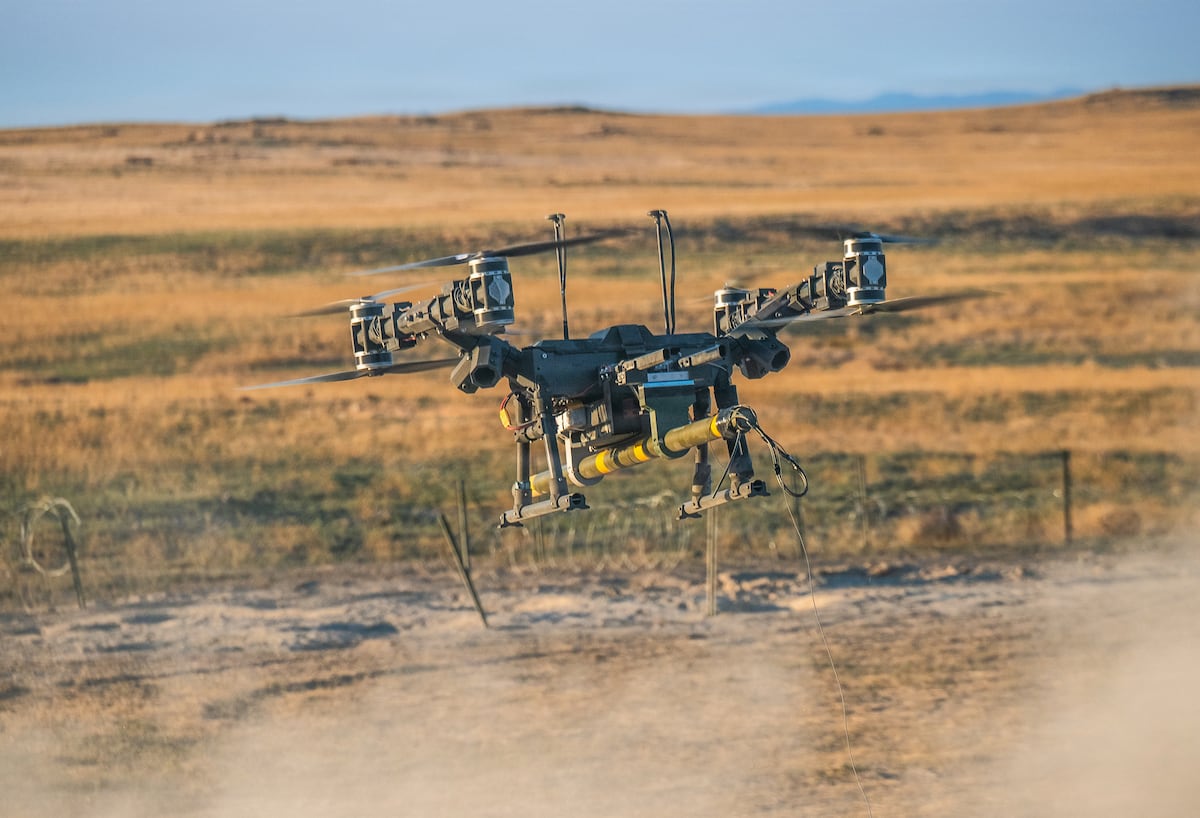
Breaching is so dangerous that the Army assumes a deliberate breach could cost half of the forces assigned to it. Hoping to reduce that toll, Oregon Army National Guard combat engineers recently tested using a heavy-lift drone to deliver an explosive-filled tube through simulated enemy defenses, the Army recently announced.
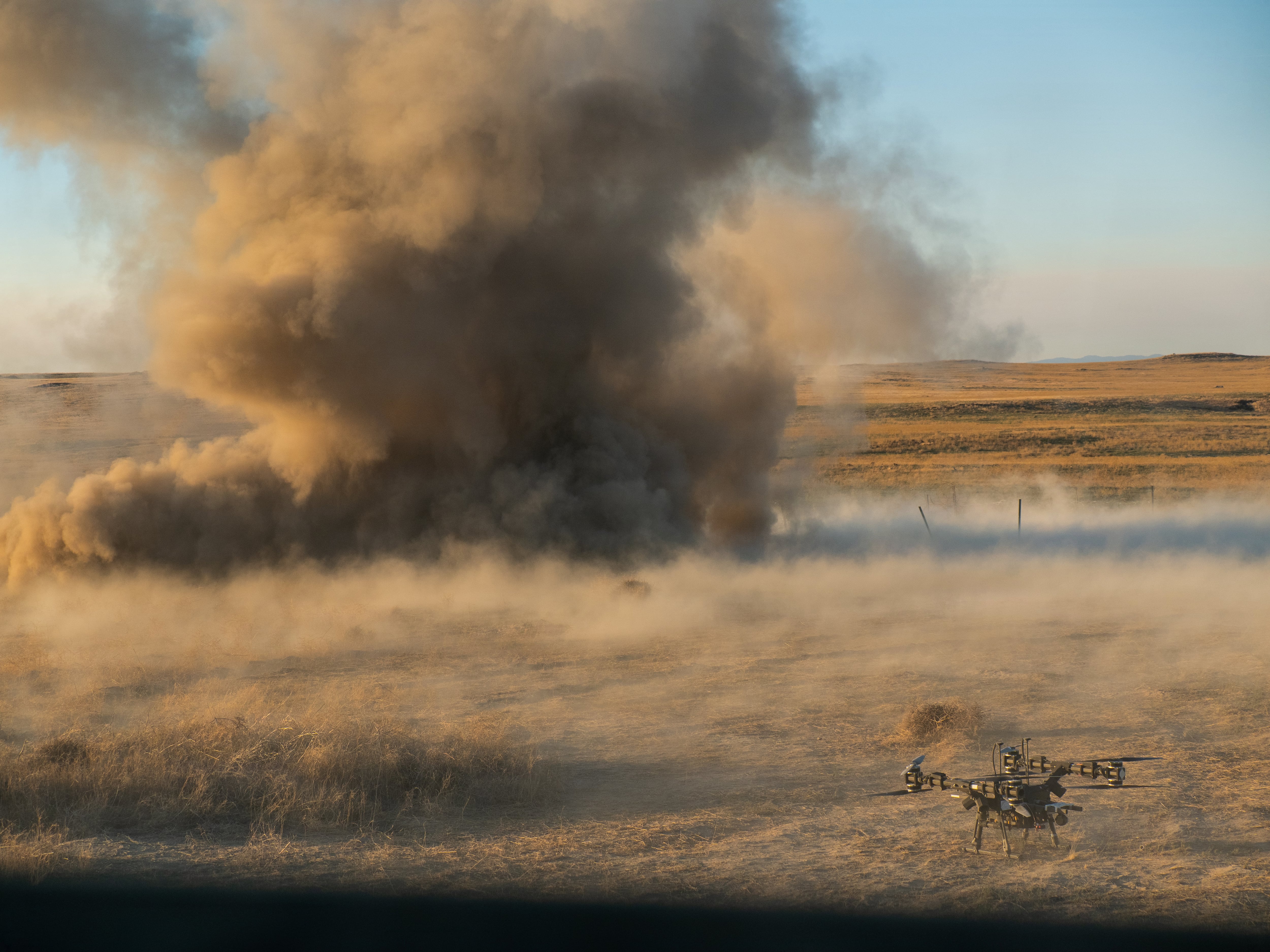
Soldiers assigned to Bravo Company, 741st Brigade Engineer Battalion, 41st Infantry Brigade Combat Team sent a live Bangalore torpedo into the Idaho sky amid 25mph gusts of wind. On a range at Orchard Combat Training Center, they maneuvered the drone and detonated the explosives, taking cover before the munition cleared a path through a wire obstacle.
The successful trial represented months of work put in by the unit’s drone working group, which was established by Lt. Col. Eric Zimmerman, the battalion’s commander, to figure out how to clear a wire obstacle with a commercial drone. Though the U.S. Army is pressing to expand drones on the water and testing turning resupply drones into rocket launchers, the group said they did not find another example of the new tactic in the U.S. Army.
Zimmerman pointed to the war in Ukraine, where drones have drastically changed the nature of war, as inspiration for the experiment. “Watching what was going on in Ukraine, and how innovative they are, it inspires you to get better and think bigger,” he said.
The trial comes as units are increasingly looking to drones to take on some of the most perilous battlefield tasks. Earlier this month, soldiers with the 101st Airborne Division used drones to pull grappling hooks and 3D-printed munitions to blast through concertina wire.
The working group looked into commercially available drones that cost between $2,000 and $40,000 before eventually receiving the Mule 28, a 45-pound heavy-lift drone developed by Lorica Technologies for the project.
The Mule 28 uses eight motors and can hoist 200 pounds into the sky with its 28-inch bi-blade propellers. It also has sensors for targeting and artificial intelligence processing. Lorica had around six weeks to develop the airframe for this project. It presently fields three other Mule 28 models.
“The most casualty-producing thing that Army engineers do is the breach,” said 1st Lt. Andrew Lucas, who co-led the working group. “Expect 50% casualties. If you can deliver something to clear the breach with a $40,000 drone, instead of putting Soldiers in harm’s way, that’s worth experimenting with.”
The engineers first used inert training rounds, practicing until the drone could reliably deliver the dummy charges to the target, before flying live explosives.
Soldiers detonated the charge using shock tube connecting them to the Bangalore instead of relying on a wireless detonator to prevent jamming or early initiation.
The future, Lucas said, may be drone breaching capabilities that require little human input.
“We’re not that far technologically from a drone that has an AI processor on it that could identify where concertina wire is,” he said, adding that in theory, soldiers could provide a rough location before the drone autonomously identifies the obstacle, positions itself, and deploys the Bangalore. Because it would happen internally, he said, the possibility of jamming would be nonexistent.
The next Mule 28 prototype, according to Lorica, will aim to integrate AI obstacle identification with the goal of increasingly autonomous breaching.
Eve Sampson is a reporter and former Army officer. She has covered conflict across the world, writing for The New York Times, The Washington Post and The Associated Press.
Read the full article here