
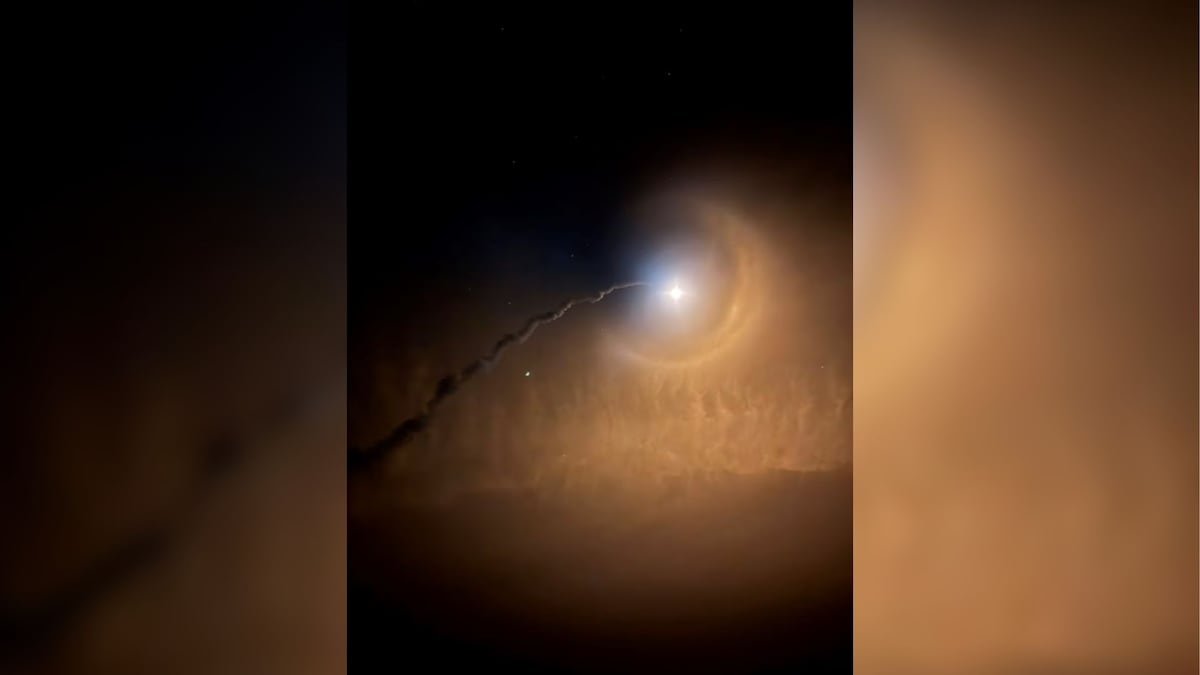

A U.S. Space Force Space Domain Awareness payload launched successfully Aug. 10 aboard Japan’s Quasi-Zenith Satellite 7, or QZS-7, completing a bilateral effort that places American sensors on Japanese navigation satellites.
The U.S. payload rode a Japanese H3 rocket from Tanegashima Space Center. It is the second and final sensor in the Quasi-Zenith Satellite System-Hosted Payload program, the first national security space partnership of its kind between the United States and Japan, according to a recent release.
The new payload will deliver near-real-time data to the Space Surveillance Network, improving the U.S. Space Force’s understanding of activities within geosynchronous orbit above the Indo-Pacific. Geosynchronous orbit, about 22,000 miles up, is where a satellite matches Earth’s rotation and remains over the same spot.
Combat Forces Command’s Mission Delta 2 will operate the sensor to identify and track objects in orbit and help operators understand potential threats or opportunities.
The Japanese QZS-7, built by Mitsubishi Electric in Kamakura, Japan, is part of a constellation that primarily augments GPS signals over Japan and the surrounding region.
Massachusetts Institute of Technology’s Lincoln Laboratory designed and built both U.S. payloads for the program. Space Force and laboratory teams worked with Japanese partners for two years to integrate and test the second sensor with its host satellite.
“The successful launch of QZS-7 is a powerful testament to the enduring strength and rapid modernization of the U.S.-Japan alliance,” Col. Bryon McClain, Space Force portfolio acquisition executive for Space Combat Power, said in the release.
“By continuing to merge our capabilities in space modernization and satellite communications, we are maintaining security in a contested space domain and fortifying our shared deterrence capabilities across the Indo-Pacific region,” he continued.
Col. Gina Peterson, deputy commander of Mission Delta 2, said the program helps the Space Force meet threats from peer adversaries and build “resilient capabilities to detect, understand, and maintain custody of objects in deep space.”
The first sensor launched in February 2025 on QZS-6. Mission Delta 2 runs both payloads through the Multi-Mission Space Operations Center/Enterprise Command and Control-Schriever enclave in Colorado.
The U.S.-Japan partnership on this program began with a December 2020 agreement between the Space Force and Japan’s National Space Policy Secretariat.
Brig. Gen. Brian Denaro, commander of U.S. Space Forces Pacific, called the alliance one of the nation’s greatest strategic advantages in the Pacific and said the program demonstrates how the two countries enhance security across the region through collaboration from design through launch.
Michael Scanlon is a defense journalist covering air and space warfare. A former U.S. Air Force A-10 crew chief, he has supported land and sea programs for the U.S. Army, Navy, Marine Corps and Coast Guard.
Read the full article here