

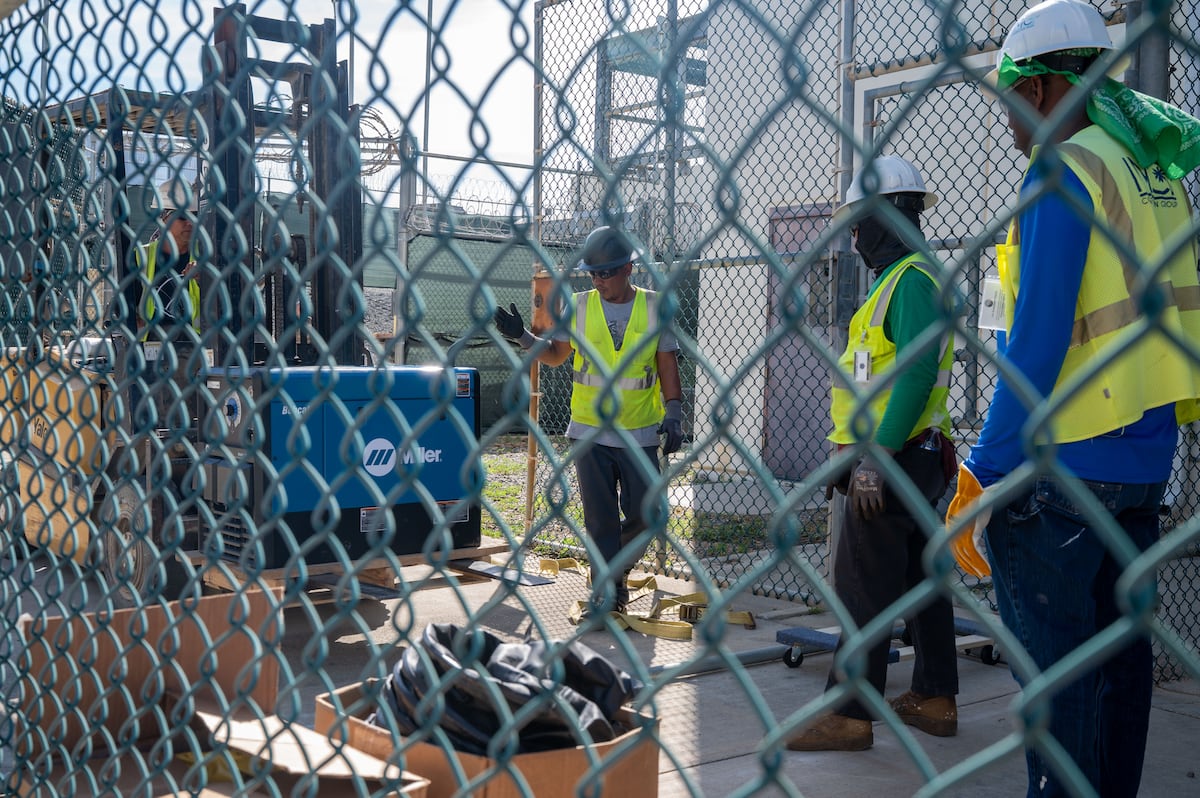

The Pentagon spent $2.85 million assembling tents at Guantanamo Bay, Cuba, that were never used to house detained noncitizens, according to the Government Accountability Office.
The government watchdog found that the Defense Department reported obligating approximately $68 million for immigration detention from Oct. 1, 2024, through May 31, 2026. The Guantanamo operation was one of six new detention-expansion initiatives U.S. Immigration and Customs Enforcement pursued without first developing a comprehensive strategic plan.
By July 2026, ICE had scaled back four of the six initiatives, resulting in wasted or potentially wasted resources, the GAO said in a Sept. 24 report.
A January 2025 presidential memorandum directed DHS and DOD to increase detention capacity at Naval Station Guantanamo Bay to 30,000 beds. DOD assembled tents for an initial capacity of 5,000 beds, but the Department of Homeland Security determined they did not meet detention standards.
The tents were taken down and never used to house detained noncitizens, in part because building facilities that met ICE standards was cost-prohibitive. DoD officials told the GAO, “detaining the planned population was deemed infeasible,” and the operation was downsized in mid-February 2025.
DOD’s role in the detention expansion extended beyond Guantanamo.
After DHS requested access to military installations in February 2025, DHS and DoD began planning detention facilities at Camp Atterbury in Indiana and Joint Base McGuire-Dix-Lakehurst in New Jersey.
By October 2025, DoD officials said they no longer planned to build detention facilities on other military installations, and DoD and ICE officials told GAO investigators the Indiana and New Jersey facilities did not move forward.
ICE’s request for military assistance had not been rescinded, however, and the agreement has remained active as of August 2026.
At Fort Bliss in El Paso, Texas, the Army awarded and administered a $1.3 billion task order on behalf of ICE for Camp East Montana, a soft-sided detention facility that opened in August 2025. The Army transferred contract administration responsibilities to ICE at the beginning of fiscal 2026.
A separate GAO report found the Army wasted up to $11.5 million on services at Camp East Montana between Aug. 1 and Aug. 15, 2025, when there were no detained noncitizens housed there. The Army later paid about $423,000 for meals it did not need while the facility operated below planned capacity.
After ICE took over the contract, it paid another $7.1 million for meals it did not need from Oct. 1, 2025, through March 12, 2026. As of August 2026, ICE had not incorporated recommended cost-saving measures into the contract and continued paying for services it did not need.
GAO recommends that ICE develop a comprehensive strategic plan for its detention expansion efforts, including goals, activities and resource needs.
DHS agreed, but said ICE does not expect to complete the plan until Aug. 31, 2027. GAO said more timely completion “may be warranted.”
Natalie Oliverio is an independent journalist and Navy veteran who covers military and veterans’ issues. Drawing on her experience as a talent executive and mentor, she writes about the policies, people and programs shaping the military community.
Read the full article here