

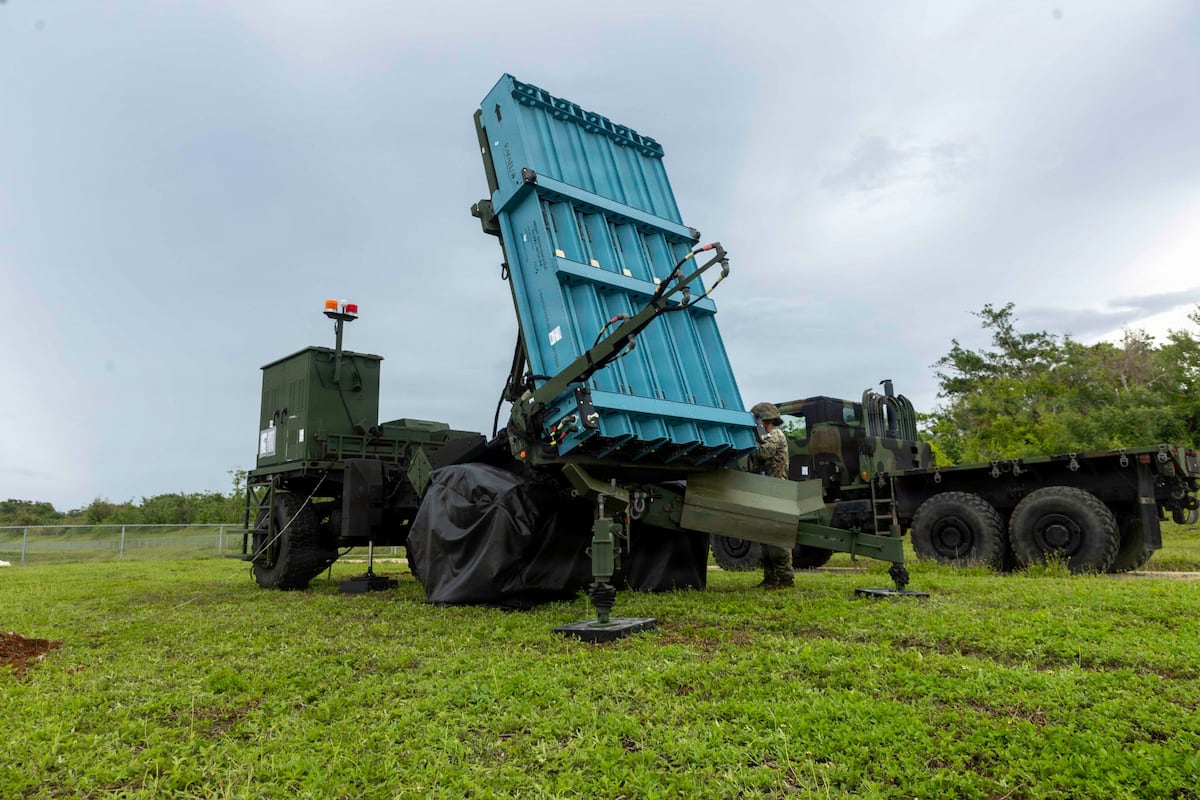

U.S. Marines on Guam recently fired the service’s new Medium-Range Intercept Capability system, representing the validation of the Corps’ first medium-range air defense system since the divestment of the service’s legacy HAWK platform in the 1990s.
The ongoing Exercise Valiant Shield became the proving ground for III Marine Expeditionary Force personnel, as Marines at Camp Blaz successfully used the MRIC to intercept an aerial target on June 30, 2026.
The MRIC is a “significant leap in operational capability,” a service release stated. The system bridges the gap between the shoulder-fired Stinger Man-Portable Air Defense System and the long-range Patriot missile system and is designed for the “expeditionary nature of Marine Corps operations.”
Deployed via trailers carrying 20 interceptors each, MRIC systems can down targets from two to 43 miles away.
The deployment of the system allows Marines to provide an “air defense umbrella” that moves with Marine forces as they maneuver inside an enemy’s weapons engagement zone, all while defending critical assets like expeditionary air bases, runways and forward arming and refueling points, according to a service release.
In 2023, the service announced that it would incorporate technology from Israel’s Iron Dome system to help furnish the Corps with its first medium-range air defense system in decades.
According to the service’s Force Design 2030, three batteries of MRIC are slated to be fielded by 2028.
“Before the MRIC, we were primarily a short-range air defense capability,” Maj. Emi Gutierrez, commander of the firing battery, said in the release. “The Marine Corps employed the Stinger for years, but that capability is significantly different. With the evolution of air defense weapon systems, we saw a need to adapt.
“Our ability to rapidly insert and fill critical gaps within an integrated air defense system is critical not only to the Marine Corps but also the joint force as a whole,” Gutierrez continued. “The MRIC fits into expeditionary warfare perfectly because of its ability to be rapidly deployed.”
Claire Barrett is an editor and military history correspondent for Military Times. She is also a World War II researcher with an unparalleled affinity for Sir Winston Churchill and Michigan football.
Read the full article here