


Twenty-six days after the Pentagon’s deadline for defense companies to propose faster weapons production, the Defense Department has not publicly disclosed how many companies responded or what production timelines they offered.
Deputy Defense Secretary Steve Feinberg gave industry leaders until Aug. 26 to submit plans for “significantly faster, more aggressive delivery schedules and/or increased production for critical capabilities,” according to his Aug. 5 memo.
Feinberg directed companies to identify ways to accelerate production and delivery, propose capital investments and facility expansions and explain how the Pentagon could enable higher production.
The memo identified 16 critical programs under consideration for accelerated production or increased procurement. The responses were intended to inform the department’s fiscal 2028 budget request.
The request came as the use of U.S. weapons during the Iran war put pressure on stocks of air-defense interceptors and other precision munitions.
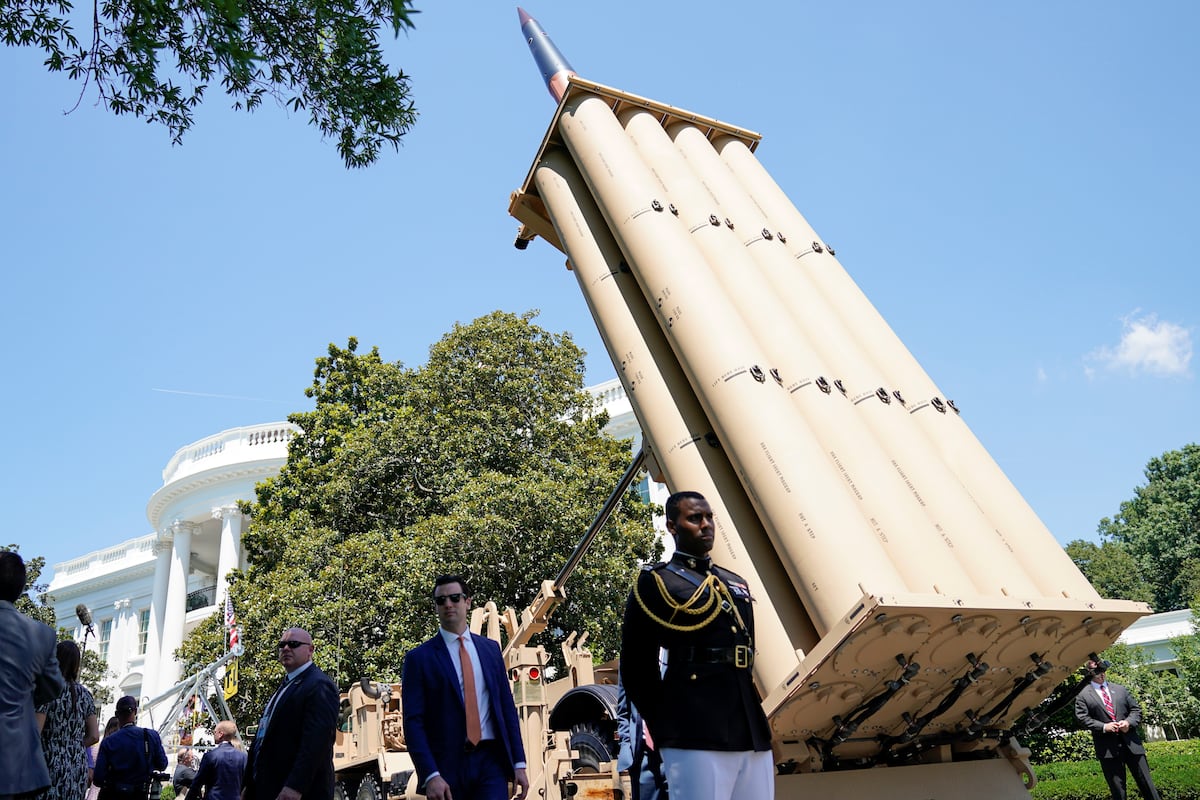
U.S. inventories of Patriot interceptors had fallen from about 2,330 before the war to between 759 and 827 by the end of July, according to a Center for Strategic and International Studies analysis. THAAD stocks had fallen from 452 to between 234 and 278.
CSIS estimated production timelines of about 42 months for PAC-3 MSE interceptors and 53 months for THAAD interceptors.
The Pentagon did not respond to questions about how many companies responded to Feinberg’s request or whether the department had accepted or funded any of the proposals.
General Dynamics also declined to discuss its communications with the department.
“We are not able to comment on our communications with the Department of War,” a General Dynamics spokesman said.
Lockheed Martin, a major supplier of U.S. missile-defense systems, did not provide a specific production timeline in response to questions from Military Times.
“We continue to have dialogue with the U.S. government to deliver what the department is asking of us and our team is pushing to do even more, faster,” a Lockheed Martin spokesman said. “We’re making significant investments in our workforce, infrastructure and production capacity and working with key suppliers to accelerate delivery of the critical capabilities that strengthen America’s Arsenal of Freedom.”
Lockheed separately announced Thursday that it had received its first PAC-3 MSE housing components from GM Defense, 22 days after the companies signed a production contract. The company said the components, which can traditionally take months or years to produce, were manufactured using GM’s casting and machining capabilities.
Lockheed said it is investing $8 billion to $9 billion to expand munitions production, including new buildings, facility expansions and thousands of jobs at more than 20 U.S. sites. The company also said planned expansions will increase its munitions production and warehousing space by nearly 50%.
The company did not say whether those investments were submitted as part of Feinberg’s Aug. 5 request.
New agreements
The Pentagon was already using framework agreements and contracts to accelerate production before Feinberg’s deadline.
On July 27, the department announced seven-year framework agreements intended to boost production of propulsion components for PAC-3 MSE and THAAD interceptors. L3Harris said its PAC-3 agreement would nearly triple production of certain propulsion products, while its THAAD agreement was intended to quadruple production of key propulsion components.
On Aug. 3, the defense department, in cooperation with Northrop Grumman and Lockheed Martin, announced two framework agreements to expand production capacity for critical PAC-3 and THAAD interceptor components. The agreements were intended to support the department’s goals of tripling PAC-3 production capacity and quadrupling THAAD production capacity.
On Aug. 14, DoD announced two separate framework agreements with Boeing and RTX to increase production of components for SM-3 Block IB and SM-3 Block IIA interceptors.
On Aug. 17, the Pentagon announced a $22.9 billion Navy contract with RTX to accelerate production of Tomahawk missiles.
On Aug. 31, five days after the industry deadline, the Pentagon announced additional seven-year multiyear procurement agreements with Lockheed Martin and General Dynamics designed to increase production quantities and accelerate delivery schedules for critical missile subcomponents supporting PAC-3 MSE and THAAD.
The Pentagon separately identified production goals of tripling PAC-3 MSE production capacity and quadrupling THAAD production capacity, with funding subject to annual appropriations from Congress.
The public announcements did not identify those agreements as resulting from companies’ responses to Feinberg’s Aug. 5 request.
What remains unclear is whether the 21-day exercise changed what the Pentagon plans to buy, how quickly it expects industry to deliver it or what additional funding and infrastructure the department will seek in its fiscal 2028 budget request.
Natalie Oliverio is an independent journalist and Navy veteran who covers military and veterans’ issues. Drawing on her experience as a talent executive and mentor, she writes about the policies, people and programs shaping the military community.
Read the full article here