

The House version of next year’s defense budget bill revives a push to use emerging technology to make military rations lighter and more portable.
While the standard Meal, Ready-to-Eat, or MRE, delivers nutritionally complete chow in a package weighing 1.5 pounds or less, that adds up for troops on the move: more than 30 pounds of supply per service member for a week-long patrol. And amid efforts across the services to prepare to operate independently in austere environments far from resupply, cutting down the weight and volume of food is a known need.
The fiscal 2027 National Defense Authorization Act calls on the secretary of defense to boost these efforts with new partnerships to create the MREs of the future.
“It is the sense of Congress that requirements for the future battlefield include dealing with contested logistics that cannot be achieved with the size and weight of currently fielded rations; and could be mitigated by incorporating within rations, components produced with emerging and innovative technologies developed in partnership with the Department of Defense Combat Feeding Research and Engineering Program,” language in the House version of the bill, passed July 22, states.
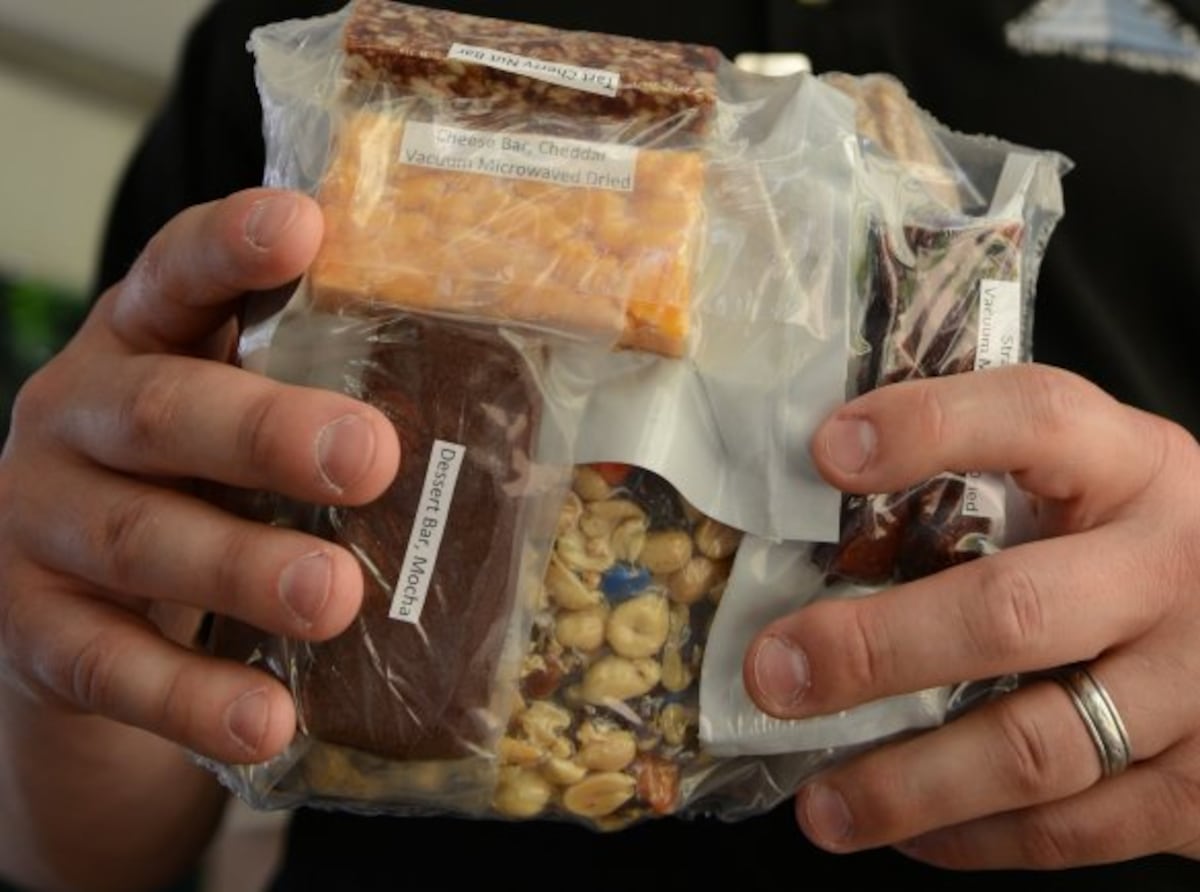
It requires the secretary of defense to seek opportunities to enter contracts to procure rations, naming two specific space-saving food technologies: sonic agglomeration and vacuum microwave drying.
Sonic agglomeration uses sound wave vibrations to compress food ingredients and stick them together without the use of fillers and binders. The Army’s Combat Feeding Directorate has been working with this technology since at least 2016, even using the method to help NASA develop a more compact breakfast bar for astronauts on future Mars missions.
Vacuum microwave drying quickly dehydrates food at low temperatures, locking in fresh flavors and colors that more conventional drying techniques can’t capture, making lightweight, water-removed rations that are more palatable for troops on the go.
In 2018, the Combat Feeding Directorate released information about work being done to develop a “salad bar” — a vacuum-compressed pack of shelf-stable fresh greens with the dressing already mixed in.
And work is happening to field at least early versions of some of these rations to the fighting forces.
Last year, the Combat Feeding Directorate announced that a new Close Combat Assault Ration, specially designed for the sustainment of units on their own for 7-10 days, could now be purchased through the Defense Logistics Agency. The CCAR saw a 39% reduction in volume and 17% production in weight compared to the eat-on-the-move First Strike Ration — which contains about 24 hours’ worth of calories — and allowed troops to “carry five days’ worth of nutrition in a 3-day footprint,” officials said.
But efforts to conduct more robust testing around sonic agglomeration and vacuum microwave drying were limited by COVID-19 pandemic delays, officials said, leaving more work to be done.
“These and other novel technologies were evaluated during the CCAR’s development and CFD will continue to work with industry partners to identify new technologies and evolve existing ones,” a 2025 release stated.
The NDAA provision directs the secretary of defense to maximize the use of the two new technologies for ration components to help bridge the gap between research and evaluation and fielding.
“As operational needs allow, the Secretary shall prioritize clean-label, nutrient-dense components that do not contain unhealthy fats or artificial preservatives,” it adds.
The provision also calls for a report to Congress no later than 120 days after the NDAA passes that includes a description of any “emerging and innovative” food processing technologies being developed for use by the Department of Defense; the total amount the Pentagon has invested in sonic agglomeration and vacuum microwave drying tech; the results of warfighter field testing of proposed ration components using these technologies; and a breakdown of benefits and barriers to using them, along with a summary of what’s being done to advance their adoption.
The House NDAA must still undergo reconciliation with the yet-to-be-passed Senate version of the bill before it can become law.
Read the full article here