

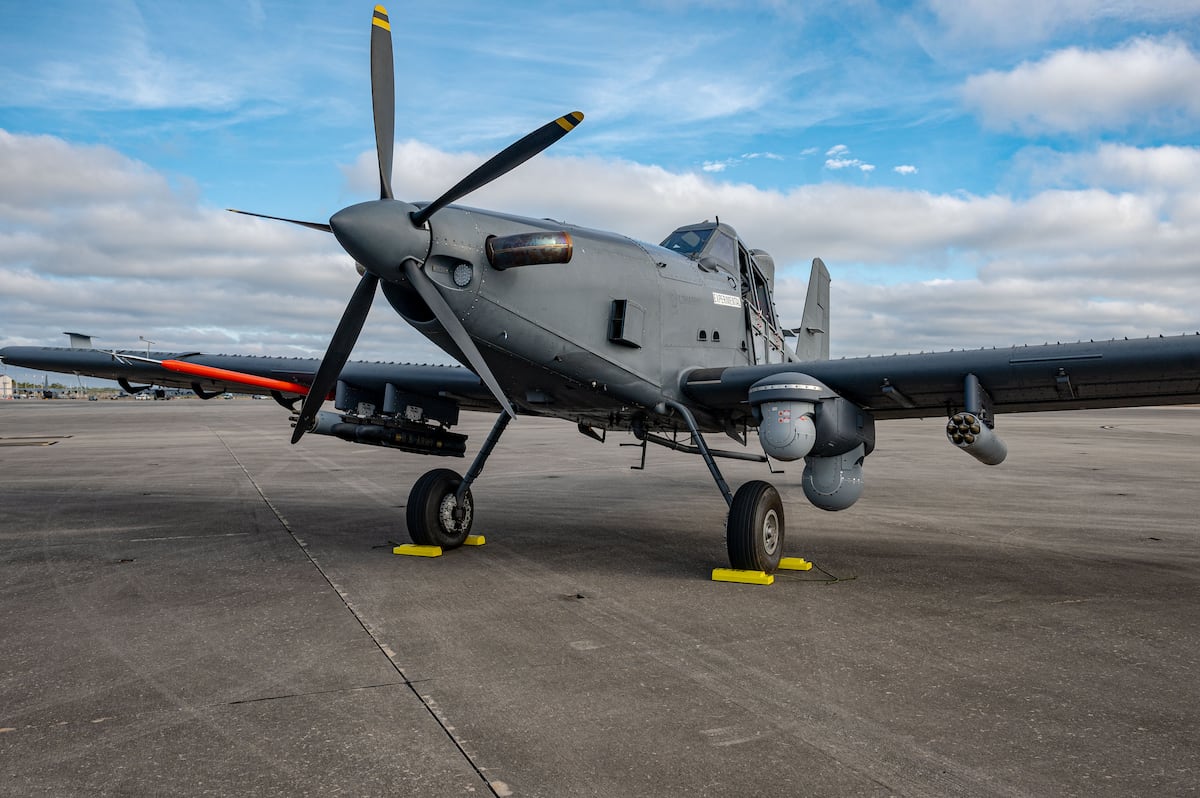

A student pilot reached for the wrong fuel control in his Block-1 OA-1K Skyraider II on Oct. 23, 2025, shutting off fuel to the engine and forcing the crew to crash-land the special operations aircraft in an Oklahoma field, an Air Force accident investigation board found.
The crash is the first time an OA-1K has been destroyed since the missionized aircraft entered service in April 2025.
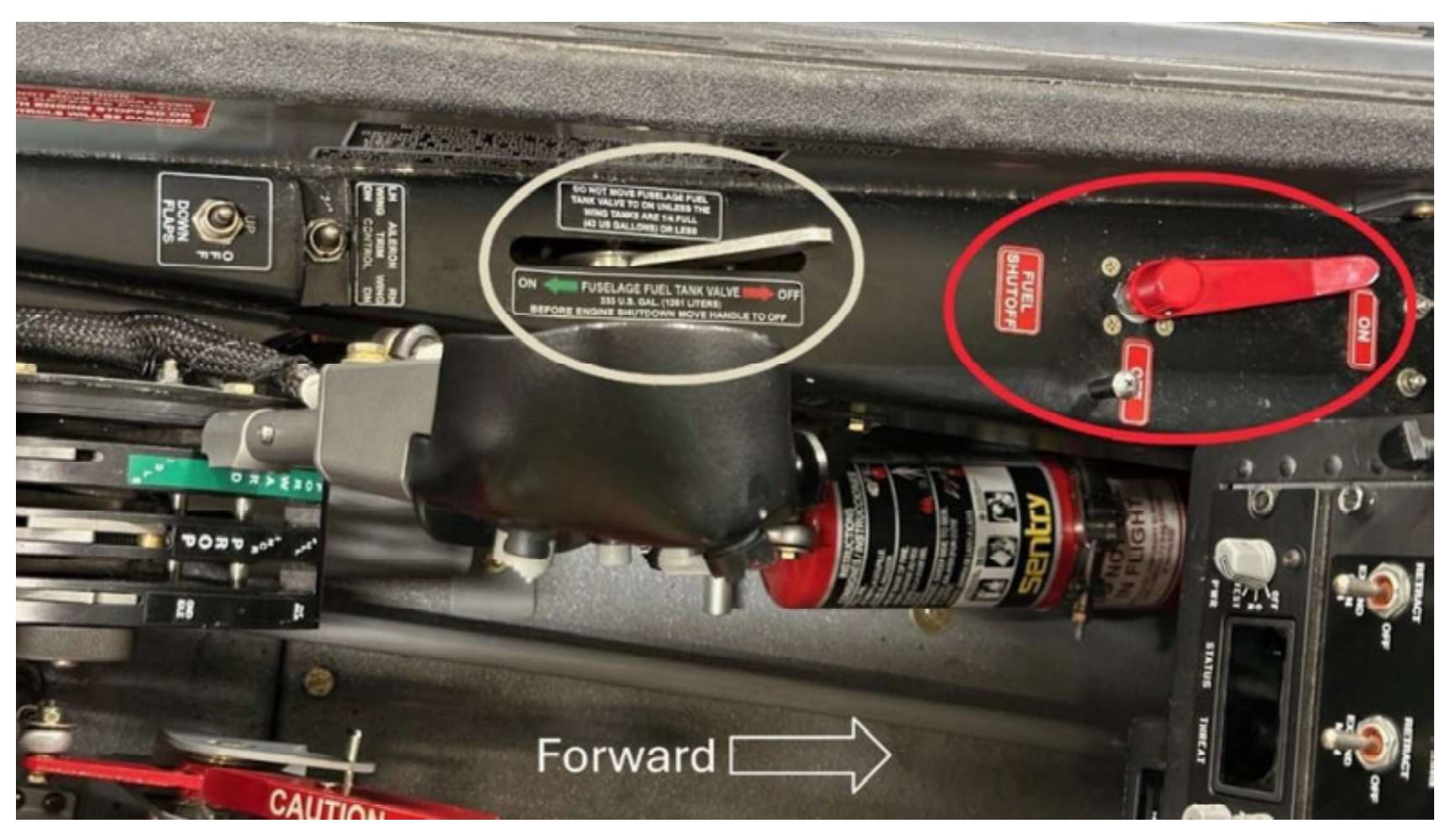
The board determined the pilot mistakenly engaged the fuel shutoff valve, normally reserved for emergencies, when the instructor told him to open the nearby fuselage fuel tank valve, a routine check crews run on nearly every flight.
The mistake “isolated the fuel supply from the aircraft firewall, starving the engine of fuel in flight,” the report said.
No one was hurt, but the aircraft was destroyed, with damage estimated at $17.9 million.
The report points to a key difference between the Block-0 and Block-1 variants as a likely source of the confusion.
Photos included in the report show the red fuel shutoff valve handle and the silver fuselage fuel tank valve lever positioned about five inches apart on the front-left side of the cockpit.
A photo taken from the pilot’s front-seat vantage point in the Block-1 variant shows the silver fuselage fuel tank valve partly hidden by the inboard power lever, while the red emergency shutoff handle is in clear view.
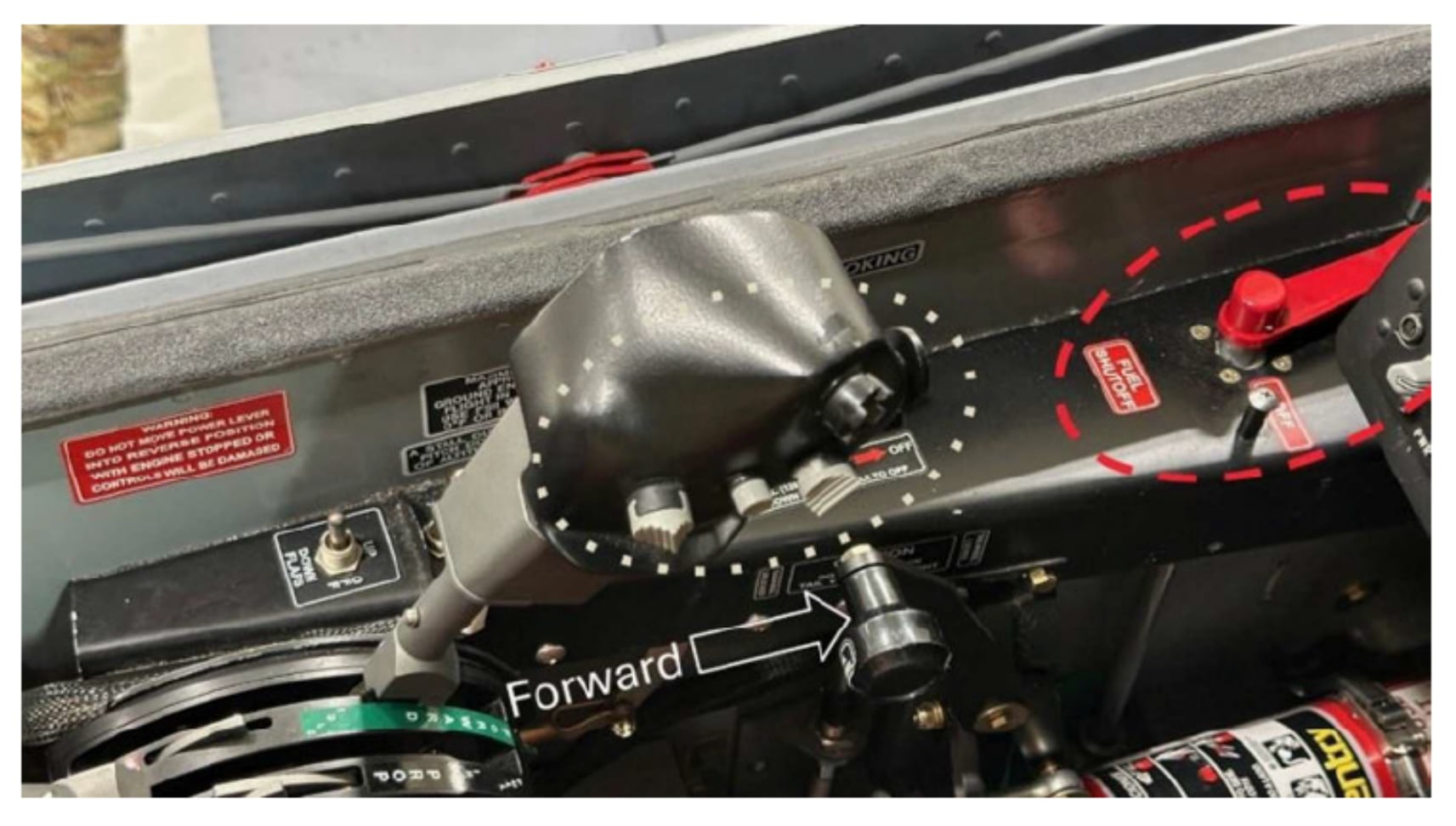
Of the student’s 37.3 flight hours in the aircraft, 34.1 were in the Block-0 trainer variant, which has a significantly smaller power lever that does not obscure the silver fuselage fuel tank valve he intended to activate.
The student pilot had logged just 3.2 hours in the Block-1 he was flying that day.
The board found the student “incorrectly identified the fuel shutoff valve handle as the fuselage fuel tank valve lever.” The report does not recommend any change to the cockpit layout.
The student pilot was an active-duty U-28 evaluator pilot with more than 2,300 flight hours.
The civilian contractor instructor was a qualified OA-1K instructor with 551 hours in the OA-1K. The report does not indicate how many hours the instructor had in each variant.
The crew was flying an initial qualification training sortie from Will Rogers Air National Guard Base under the call sign ZORRO 75.
The aircraft was operated by the 17th Special Operations Squadron, the formal training unit standing up the Skyraider II fleet, and assigned to the 492nd Special Operations Wing at Hurlburt Field, Florida.
The crew had leveled off at 2,300 feet above the ground when the instructor called for the fuel check. After erroneously cutting off fuel, the student realized his mistake and turned it back on a few seconds later, but by then the engine was already winding down, and restoring fuel alone would not restart it.
He never told the instructor seated behind him what had occurred.
The instructor took the controls, called a mayday and put the Skyraider II down in a field near Southeast 119th Street and South Sooner Road. The aircraft clipped a tree, road signs, two utility poles and a barbed-wire fence before coming to a stop, with a piece of utility pole guy wire twisted around the propeller.
The board cited three factors that substantially contributed to the crash, all tied to how the tandem crew handled the moment rather than the aircraft itself: pilot task saturation, ineffective task prioritization, communications challenges and ineffective crew resource management.
The report notes that the student was also struggling with his helmet and intercom settings amid engine and wind noise, and turned his attention to the communications problem just as fuel pressure began to drop.
The board also faulted the crew for skipping the emergency steps that might have prevented the crash.
Rather than running the critical action procedures, the instructor focused on setting up the forced landing. Those procedures are “designed to restart the engine, and if unsuccessful, feather the propeller to increase glide distance and time available for decision making before impact,” the report said.
At 2,300 feet, the board found the crew had time to try.
The OA-1K is a militarized version of the Air Tractor AT-802 crop duster, bought under U.S. Special Operations Command’s Armed Overwatch program. It is designed to give isolated special operations teams armed overwatch and reconnaissance from rough dirt strips. The program of record is 75 aircraft, though 53 have been funded to date.
Michael Scanlon is a defense journalist covering air and space warfare. A former U.S. Air Force A-10 crew chief, he has supported land and sea programs for the U.S. Army, Navy, Marine Corps and Coast Guard.
Read the full article here