

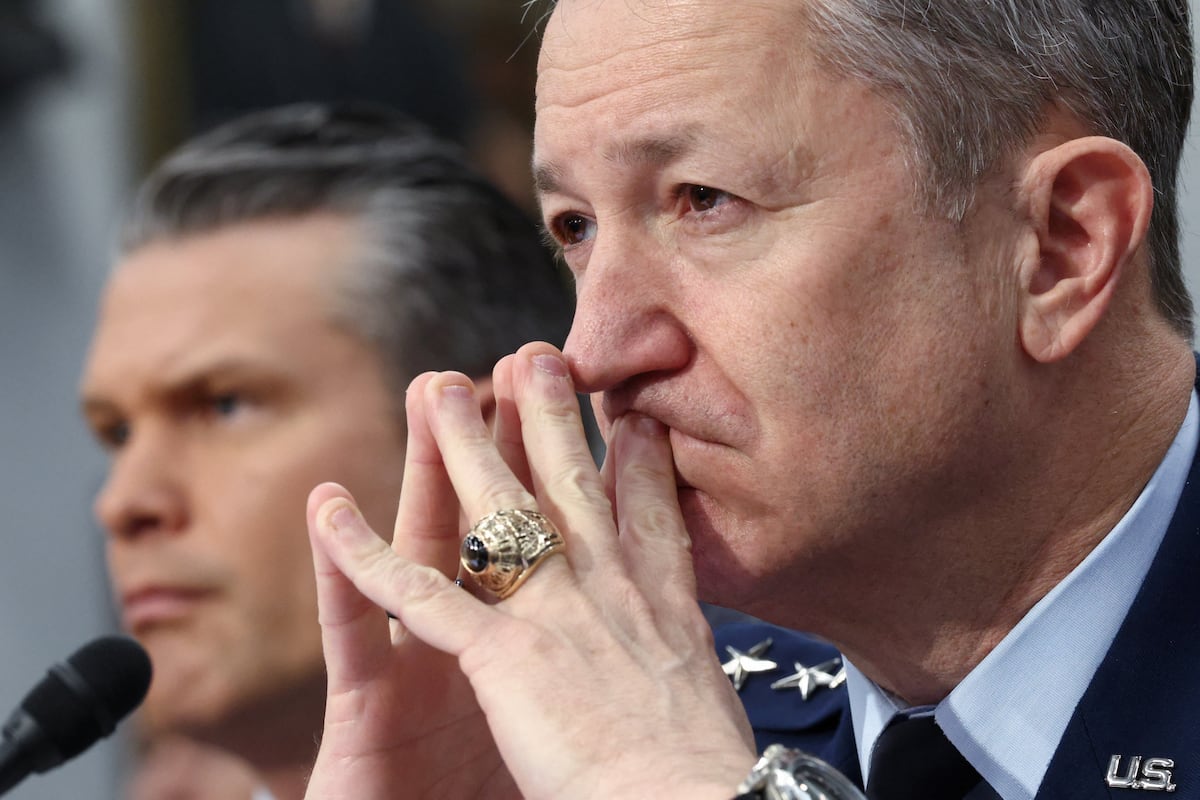

The United States has spent an estimated $29 billion in the war against Iran, the Pentagon said Tuesday, as senior defense officials appeared on Capitol Hill for back-to-back budget hearings.
Jules Hurst III, the Defense Department’s acting comptroller, said the increase from $25 billion just two weeks ago reflects “updated repair and replacement of equipment costs,” along with the “general operational costs” of sustaining forces in the theater.
Hurst emphasized that the projection does not include expenditures for repairing damaged military installations in the region.
“We have a lot of unknowns there,” he said. “We don’t know what our future posture is going to be. We don’t know how we construct those bases, and we don’t know what part our allies or partners could pay into our MILCON costs.”
The tenuous month-long ceasefire in the Middle East hangs in the balance after President Donald Trump on Monday dismissed Tehran’s latest proposal to end the war as “garbage.” Hours later, the Speaker of Iran’s parliament warned that the country stands ready to “deliver a lesson-teaching response” to any act of aggression.
Despite a declared truce, the two sides have continued to exchange limited fire near the Strait of Hormuz. The Islamic Republic recently launched missiles, drones and small boats at U.S. warships transiting the sea, prompting American strikes on Iranian military sites in response.
Defense Secretary Pete Hegseth on Tuesday suggested that the situation remains fluid.
“As you know, for the most part, ceasefire means fire is ceasing,” Hegseth said. “We have a plan to escalate, if necessary. We have a plan to retrograde, if necessary.”
Asked about the status of Project Freedom — a one-day campaign in which U.S. warships and aircraft briefly guided commercial vessels through the Strait of Hormuz — the defense secretary described it as “paused” and added, “It’s an option we could always recommence, should the commander in chief want us to.”
Hegseth and Gen. Dan Caine, the chairman of the Joint Chiefs of Staff, also sought to dispel concerns that Operation Epic Fury had triggered significant munitions shortages within the U.S. military.
“I take issue with the characterization that munitions are depleted in a public forum — that’s not true,” Hegseth claimed. “Ultimately, we have all the munitions needed to execute what we need to execute and we are going to ensure that we supercharge that going into the future.”
Caine said, “We have sufficient munitions for what we’re tasked to do right now. That’s what I hear from the [Unified Combatant Commands],” noting, “We’re always going to want more munitions.”
Hegseth, Caine and Hurst appeared on Capitol Hill to advance a two-pronged appeal encompassing the annual budget and additional funding for the ongoing war in Iran. A substantial portion of the request, they indicated, would be directed toward replenishing depleted weapons stockpiles.
Tanya Noury is a reporter for Military Times and Defense News, with coverage focusing on the White House and Pentagon.
Read the full article here