
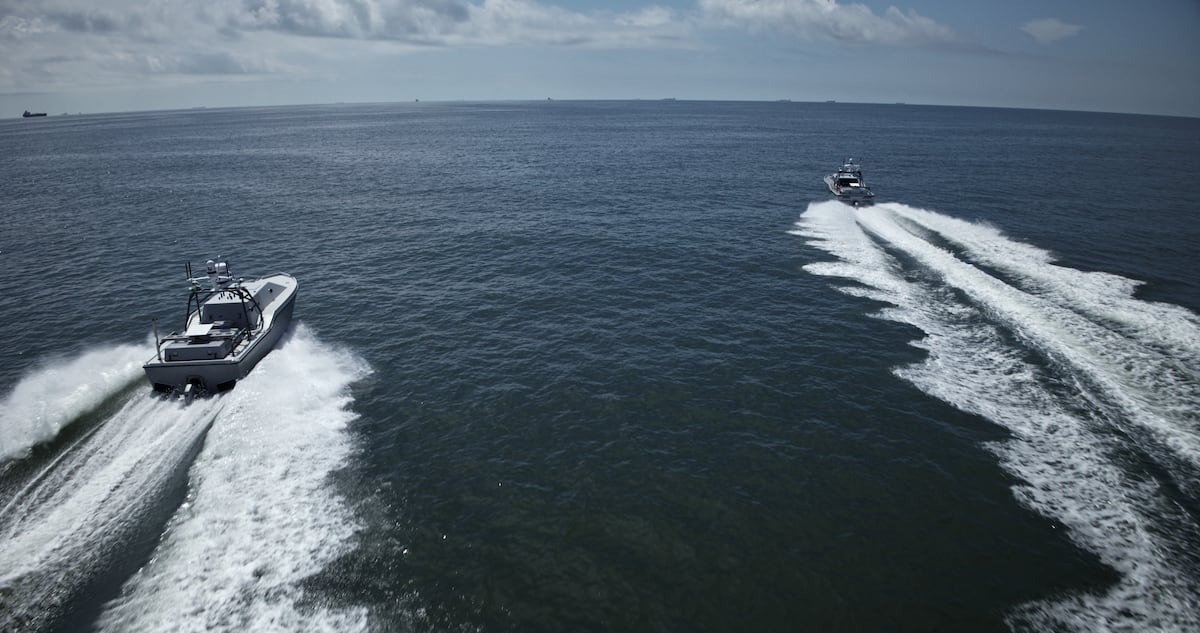

When a U.S. Army helicopter went down near the Strait of Hormuz in June, an unmanned U.S. Navy vessel went looking for the crew.
The Corsair, operated by U.S. 5th Fleet’s Task Force 59, helped recover two U.S. service members. A month later, three Corsairs were used for something entirely different: striking a submarine and ship maintenance facility at the Bandar Abbas naval base in Iran, marking the “first time American forces have employed sea drones in combat operations,” CENTCOM confirmed.
The two missions illustrate how quickly unmanned systems have moved from experimentation and exercises into the demands of an active war.
A U.S. official told Military Times that American forces are now using unmanned systems “on, above, and below [the sea],” in support of military objectives and said they have been effective, particularly in reducing risk to U.S. forces personnel.
Joshua Tallis, director of Ally and Partner Security Affairs at the Center for Naval Analyses, or CNA, said real-world use of uncrewed systems gives the Navy an “unrivaled opportunity” to learn how to command and deploy robotic systems and refine their deployment, employment and sustainment.
Deployment of unmanned systems
The Navy began Task Force 59 in 2021 to accelerate the integration of unmanned systems and artificial intelligence into operations across the Middle East. The task force used unmanned platforms to expand maritime awareness and work alongside crewed ships and aircraft.
In a 2022 exercise, unmanned vessels identified training targets and relayed information to command centers ashore, while the Navy said the additional sensors could help position crewed ships to respond more rapidly.
By 2024, the service had established Task Group 59.1 to focus on the operational deployment of unmanned systems teamed with manned operators. Task Force 59 personnel participated in more than 30 exercises and operations under its previous commander, according to the Navy.
The Navy’s February 2026 Fighting Instructions lay out specific roles for unmanned platforms. Chief of Naval Operations Adm. Daryl Caudle described medium unmanned surface vessels as designed for “scouting, screening, and striking,” while identifying unmanned underwater vehicles for water-space denial, survey and mine warfare. The 2026 guidance also calls for attritable, easily replenishable unmanned surface vessels as part of the fleet’s force design.
That Navy effort is now unfolding alongside a separate CENTCOM push to put unmanned systems directly into combat.
CENTCOM has already begun building a combat-focused unmanned force. In December 2025, the command established Task Force Scorpion Strike as the military’s first dedicated one-way attack drone squadron in the Middle East.
The task force employed low-cost one-way attack drones during Operation Epic Fury. At the same time, CENTCOM used unmanned attack vessels during the July strikes on Iranian port facilities, according to the command.
In August, CENTCOM announced plans for Task Force Falcon Strike, a multinational, multidomain attack-drone task force that will use one-way attack drones from above, on and below the sea. CENTCOM said Falcon Strike would expand attack-drone capabilities across the Middle East with regional partners.
The Fighting Instructions also envision unmanned and manned units operating with varying degrees of independence. Caudle said the Navy will use “Delegated Autonomy Levels” to define “what a unit manned or unmanned can do independently,” based in part on its ability to sense the battlespace, synthesize what matters and deliver effects without waiting for higher headquarters.
Combat risks
Combat puts additional demands on unmanned systems, including maintaining communications, operating for extended periods, navigating contested waters and remaining useful when an adversary is actively trying to interfere with them.
The systems are no longer being judged only in an exercise environment. They are being judged in real time by what happens when an adversary is working to stop them.
Despite the opportunities provided by deploying uncrewed systems in the current conflict, Tallis cautioned against drawing broad conclusions from it. The public examples from the war, he said, should be viewed as “an iterative learning moment, not a fully formed vision of the future fight.”
Cost is one unresolved issue. Open-source estimates put a Corsair at about $1.1 million, Tallis said. That raises a broader question about what it means for an unmanned system to be considered “attritable,” “consumable” or “expendable.”
The war has also exposed the risks that come with putting unmanned systems into contested waters.
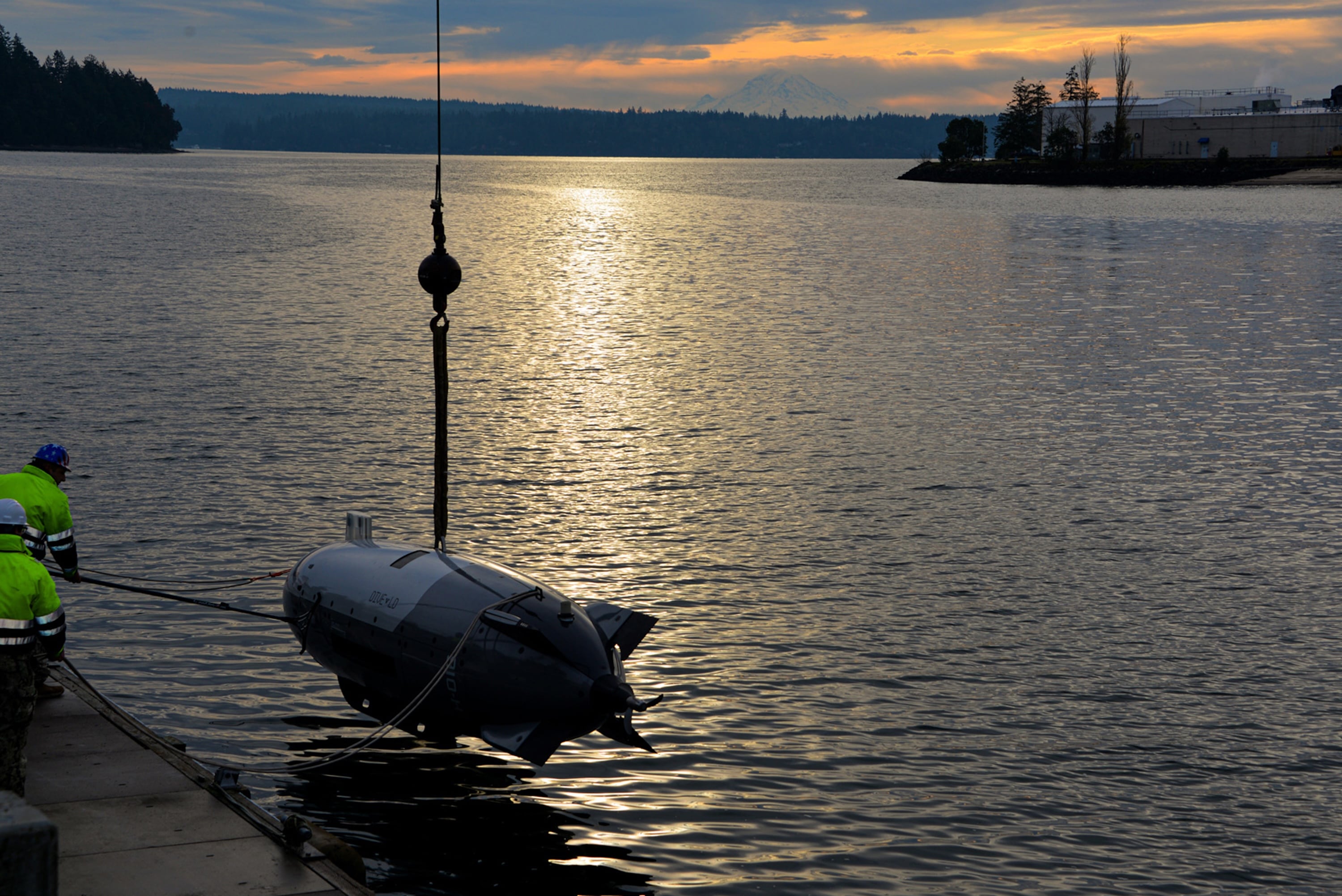
In September, Iran said it had captured an Anduril Dive-LD autonomous underwater vehicle that had malfunctioned while surveying regional waters. CENTCOM said the vehicle was an older model that did not collect sensitive data or carry classified sonar or radar equipment.
More recently, CENTCOM said two Iranian boats attempted to take possession of a U.S. Saildrone unmanned surface vessel operating in the Strait of Hormuz. U.S. forces destroyed the boats, according to the command.
According to Tallis, there is an unanswered question of how much risk the military should accept when deploying uncrewed systems, including how to determine when a system has delivered enough value to justify its loss. Many unmanned systems are cheaper than crewed platforms, he said, but “not, per se, cheap.”
Tallis said unmanned systems remain particularly well suited to surveillance, consistent with their use by the U.S. over the past two decades. But there is not yet enough evidence to demonstrate a meaningful change in the use of unmanned surface vessels for strike.
Search-and-rescue missions could also require platforms to be positioned across a theater to provide quick reaction times, something Tallis said does not yet appear to be widely fielded.
Natalie Oliverio is an independent journalist and Navy veteran who covers military and veterans’ issues. Drawing on her experience as a talent executive and mentor, she writes about the policies, people and programs shaping the military community.
Read the full article here