


Nearly six weeks of war in Iran have ended, for now, with President Donald Trump claiming victory, but the U.S.-Iran ceasefire locks in a harsh reality: an entrenched, radical government with control over the Strait of Hormuz and a powerful lever over global energy markets and Gulf rivals, analysts say.
The shockwaves have rippled outward, contributing to global economic strains and bringing conflict to Gulf neighbors whose economies depend on stability.
“This war will be remembered as Trump’s grave strategic miscalculation. One whose consequences reshaped the region in unintended ways,” Middle East scholar Fawaz Gerges told Reuters.
Before the war, the Strait, a narrow passage carrying around a fifth of the world’s oil and gas, was formally treated as an international waterway. Iran monitored it, harassed shipping and intermittently intercepted vessels, but it stopped short of asserting outright control.
In the new reality, Tehran has moved from shadowing tankers to effectively dictating terms. It currently functions as the de facto gatekeeper of the shipping route, selectively deciding on passage and on what terms. Iran wants to charge ships for safe passage.
Additionally, Iran has demonstrated resilience under sustained attack and retained the capacity to escalate further, projecting influence across multiple fronts and strategic choke points.
Its reach extends through Lebanon and Iraq via Hezbollah and Shi’ite militias, and into the Bab el-Mandeb in the Red Sea, leveraging the sphere of influence of its Houthi allies.
At home, Iran’s leadership remains firmly in control – even though the country’s economy is in tatters and great swathes of infrastructure in ruins from American and Israeli bombs.
“What did the U.S.–Israeli war actually achieve?” asked Gerges. “Regime change in Tehran? No. The surrender of the Islamic Republic? No. Containment of Iran’s stockpile of highly enriched uranium? No. An end to Tehran’s support for its regional allies? No.”
Iran has absorbed the blows while retaining — and in some cases strengthening — its core instruments of power, said four analysts and three Gulf government sources who spoke to Reuters for this story.
As well as Iran’s control of Hormuz, the political picture now, they noted, is of a more brutal, empowered establishment, unaccounted nuclear material, continued missile and drone production, and ongoing support for regional militias.
Echoing Trump, U.S. Defense Secretary Pete Hegseth on Wednesday said Washington had won a decisive military victory, and that Iran’s missile program had been functionally destroyed. The State Department and White House did not immediately respond to requests for comment.
The United States, Israel and Iran agreed to a two-week ceasefire and U.S. and Iranian officials are expected to hold talks from Friday to discuss a long-term settlement.
While the ceasefire may halt the fighting, the Gulf officials said its durability hinges on addressing the deeper conflicts shaping the region’s security and energy landscape.
Any deal that falls short of a comprehensive settlement risks entrenching Iranian leverage rather than constraining it, they add.
Ebtesam Al‑Ketbi, president of the Emirates Policy Center described the truce as a fragile pause, one likely to institutionalize new forms of instability unless it expands well beyond a narrow cessation of hostilities.
“This ceasefire is not a solution; it is a test of intentions,” Ketbi told Reuters. “If it does not evolve into a broader agreement redefining the rules of engagement – in Hormuz and across proxy theaters — it will amount to little more than a tactical pause before a more dangerous and complex escalation.”
“If Trump reaches a deal with Iran without addressing core issues – ballistic missiles, drones, proxies, nuclear concerns, and the rules governing Hormuz – then the conflict is effectively left unresolved and the region exposed,” said Ketbi.
HORMUZ IS RED LINE FOR GULF COUNTRIES
Iran, for its part, has put forward to Washington terms that include sanctions relief, recognition of enrichment rights, compensation for war damage and continued control over the Strait, underscoring just how far apart the sides remain.
Trump acknowledged receiving the Iranian plan and called it “a workable basis to negotiate.”
For Gulf countries who rely on Hormuz to export their oil, the Strait remains a non-negotiable red line, added Saudi analyst Ali Shihabi.
“Any outcome that leaves the waterway effectively in Iranian hands would be a defeat for President Trump,” with the potential repercussions of high energy prices extending into the midterm elections, he said.
What the war may nonetheless open up for Tehran, Shihabi added, is the prospect of a negotiated settlement — potentially including sanctions relief.
From a Gulf perspective, the picture is deeply unsettling. Mistrust of Iran is running high following Tehran’s strikes on energy facilities and commercial hubs across the region. More troubling still, the war has transformed Hormuz into an explicit instrument of leverage and coercion, analysts say.
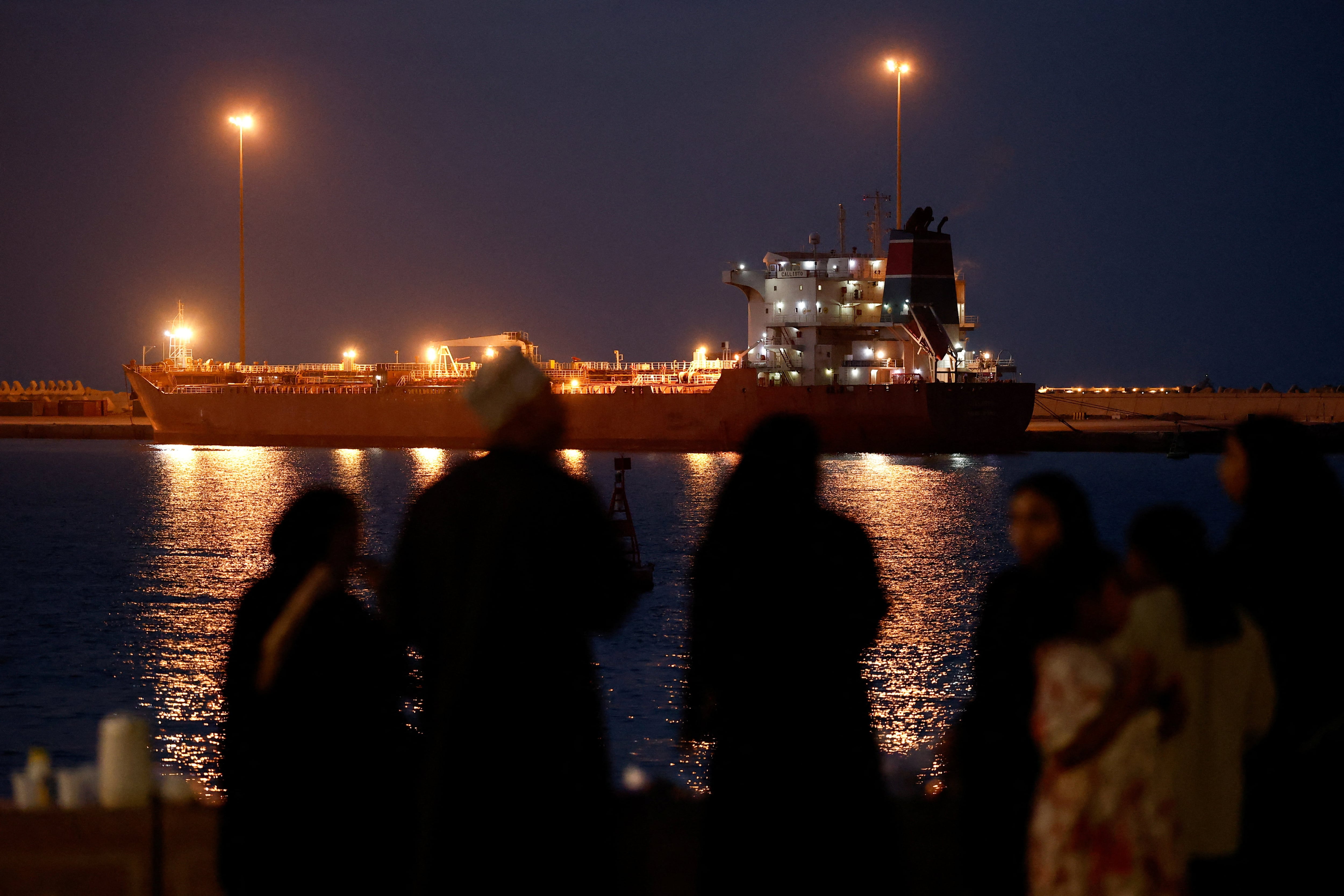
The economic stakes are equally stark. Iran wants to charge fees for ships passing through the Hormuz shipping lanes as part of any permanent peace deal, a move that would reverberate far beyond the Gulf, hitting global energy markets and the economic lifelines of states along the opposite shore.
“If Iran can extract millions per ship, the implications are enormous — not just for the Gulf, but for the global economy,” Ketbi said. “In that sense, the outcome is not just a regional setback, but a systemic shift with worldwide consequences.”
More broadly, the analysts warned, it would signal a fundamental change in the regional order, from a strait governed by international norms to one effectively policed by a hostile state emboldened, not weakened, by war.
GULF DEMANDS
The ceasefire, brokered by Pakistan, followed a war launched on February 28 by Trump and Israeli Prime Minister Benjamin Netanyahu, who said they aimed to curb Iran’s regional power, dismantle its nuclear program and create conditions for Iranians to topple their rulers.
Both sides declared victory. Trump called the ceasefire a “total and complete victory,” saying U.S. forces had achieved their objectives, while Iran’s Supreme National Security Council claimed Trump had accepted its conditions.
But the war has yet to deprive Iran of its stockpile of near‑weapons‑grade enriched uranium or its ability to strike neighbors with missiles and drones. The leadership, which faced a mass uprising months ago, withstood the superpower onslaught with no sign of collapse.
A Gulf source said restoring trust with Tehran would require stringent, written commitments — not informal assurances — covering non‑interference, freedom of navigation, and the security of key maritime corridors, including Hormuz, as well as the national security requirements of the Gulf states.
Those conditions, the Gulf source said, were conveyed to Pakistani mediators to be included as part of a comprehensive settlement.
An Israeli official said senior Trump administration officials had assured Israel that they would insist on previous conditions, such as the removal of Iran’s nuclear material, a halt to enrichment and the elimination of ballistic missiles.
Pakistan’s prime minister said Iranian and U.S. delegations were expected to meet in Islamabad on Friday for what would be the first official peace talks since the war began.
Read the full article here