


This report contains discussion of suicide. Troops, veterans and family members experiencing suicidal thoughts can call the 24-hour Suicide and Crisis Lifeline at 988 and dial 1, text 838255 or visit VeteransCrisisLine.net.
The news of eight attempted suicides across the USS Abraham Lincoln strike group generated fresh heartache and outrage for U.S. Navy families of sailors assigned to Tinker Air Force Base in Oklahoma City, including Alicia Kelsey.
Kelsey’s son, Thatcher Rupert, a 20-year-old sailor assigned to Fleet Air Reconnaissance Squadron 3 — the “Ironmen” — struggled with depression and was hospitalized twice in the months leading to his death in December.
On Dec. 9, 2025, Rupert sought emergency mental health care at the 72nd Medical Group clinic. There, he was told he would be sent to an off-base inpatient facility where he previously received suboptimal care, his mother said.
Left alone while he waited for further instructions on the transfer, Rupert bolted from the clinic, headed toward Interstate 35 and jumped off an overpass.
The suicide was the seventh in the Navy’s Strategic Communications Wing 1 and its subordinate squadrons since March 2025.
Rupert’s death drew a massive response from Navy leadership and the attention of Democrat Richard Blumenthal, the senior senator from Rupert’s home state of Connecticut, who inquired about the tragedy in a February hearing.
Despite the scrutiny, however, the wing experienced another suicide only three months later: Aviation Structural Mechanic (Safety Equipment) 2nd Class Carlin Adams — CJ, to family and friends — died by suicide in March, the eighth suicide at the base in one year.
“I had just talked to him,” his mother, Sharonda Adams, told Military Times. “I think he just went and did it. That was how he was. CJ’s like me; he kind of holds stuff in.”
The Navy currently is under fire for deteriorating conditions aboard the Nimitz-class aircraft carrier USS Abraham Lincoln and other vessels in the strike group that may have contributed to eight suicide attempts during the carrier’s record-long deployment to the Middle East. Tinker personnel and Navy families say the strike group’s issues are emblematic of the service’s failure to care for its biggest asset: young sailors.
“I’m furious, you know? And really sad,” Kelsey said. “It’s a shame. It’s a damn shame.”
A ‘doomsday’ mission
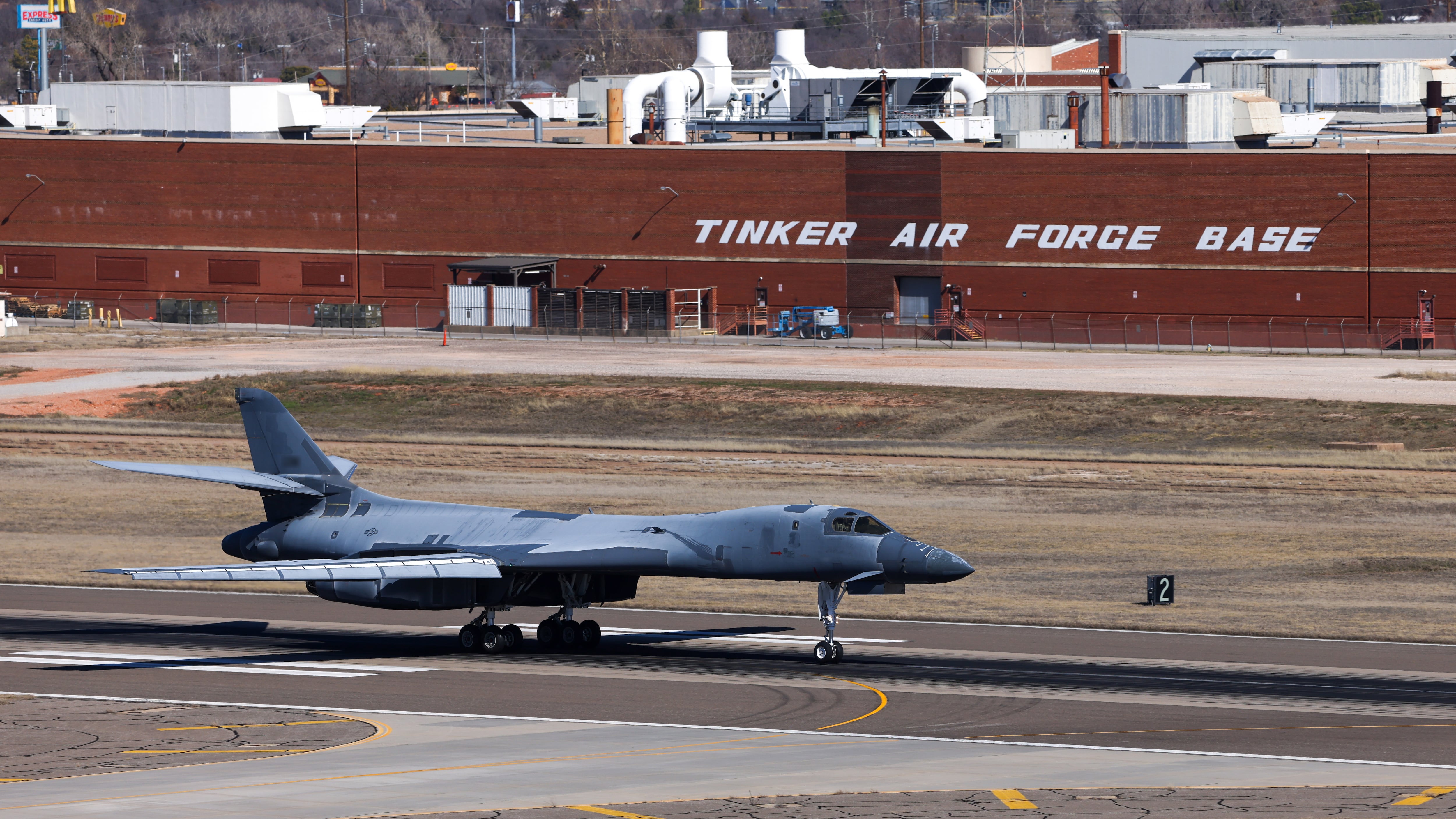
Strategic Communications Wing 1 operates and supports the E-6B Mercury, a modified Boeing 707 aircraft that supports secure communications in the event of a nuclear weapons crisis. Sometimes called the “doomsday plane,” the platform allows for command and control of U.S. nuclear forces by the president, defense secretary and U.S. Strategic Command.
Roughly 1,700 active-duty personnel are assigned to the wing, and the job of preparing for a worst-case scenario mission and maintaining aging aircraft is extremely stressful, Lt. Kendrick Moss, an E-6B naval flight officer, told Navy Times.
Moss said wing members work “incredibly long” hours. Air crews do one-month-on, one-month-off rotations and are on call, training or engaging in temporary duty assignments while they are “off.” The schedule leaves members with less family time than their counterparts on surface warfare vessels, Moss said.
“I’ve noticed a sharp decline in job satisfaction because we do a mission that is supposed to take place in the post-nuclear world … the problem is, you don’t see the fruits of your labor, because you don’t want to see the fruits of your labor,” Moss said in an interview.
“The work is never finished” because of the complexities of caring for the almost 30-year-old aircraft, he added.
Thatcher Rupert was a yeoman in VQ-3. When he enlisted after high school, he wanted to enter the Navy’s enlisted nuclear program, his mother said. But he suffered from migraines, and — despite being told by a recruiter that the health condition would not hinder his career — developed a migraine in boot camp, rendering him ineligible for his dream job.
At Tinker, Rupert was allowed to move to an off-base apartment. He bought furniture and household goods and got a dog. But the move put him in debt and exacerbated his isolation, Kelsey said. He sought treatment for depression, but the various pills he was prescribed didn’t have much of an effect.
His parents tried to help him from afar, but it wasn’t enough.
“There has to be some type of reform,” Kelsey said. “We have to protect these poor kids.”
Carlin Adams was an older, more experienced sailor who loved the service, his wife, Anaya, and his dogs, Sharonda Adams said. He had deployed once on the aircraft carrier USS Nimitz, visiting Dubai, Malaysia and Guam. He looked forward to his new assignment at Tinker.
But Navy life and Oklahoma City wore thin on Anaya, who wanted to move back to her home state of Massachusetts.
Adam began talking about leaving the service to save his marriage and sought counseling for stress. But on March 24, Adams shot himself in front of his wife, his mother said.
“[Anaya] said later, she didn’t realize that he was hurting so bad,” Sharonda Adams said.
Military suicides reflect civilian trends
The rate of suicides among military personnel has risen steadily since 2011, despite a decline from 2022 to 2024.
Rupert and Adams were among the military population most at risk for suicide: young, male and under the age of 30.
In 2024, the most common stressors seen in service members who died by suicide were: a mental health diagnosis within the year before they died, at 65%; relationship problems, at 38%; workplace stressors, 38%; legal issues, 20%; and financial issues, 13%, according to the Department of Defense Suicide Prevention Office.
The year before, relationship problems were the most common thread among the deceased, at 44%, while 42% had a mental health diagnosis, 29% had legal or administrative problems, 24% had workplace difficulties and 12% had financial woes.
In 2025, the Navy recorded 73 suicides, up from 59 the previous year.
Navy officials say the rise reflects a trend among all young people in the U.S., with rates increasing in the past two decades but declining from 2023 to 2024, the most recent year for which data is available.
“What we find, interestingly enough, is that the top stressors that impact sailors are very, very similar to what you see in the civilian sector. It’s relationships, it’s finance, it’s transitions, those kinds of things, and so we continue to look at, ‘How do we provide the best support for the sailors that need it when they need it?’” retired Navy Capt. Paul Rosen, acting director of the Navy’s Culture and Force Resilience Office, said during a Sept. 17 roundtable on suicide prevention.
In 2023, after five confirmed suicides among the crew of the aircraft carrier USS George Washington while it was in a Norfolk, Virginia, shipyard, the Navy introduced a new approach to supporting members, known as “Quality of Service.” The strategy aimed to improve mental and physical health by providing more career opportunities and sea time, allowing sailors to live off ship while vessels are in drydock and improving quality of life with better food, living conditions and internet access.
The service also published a “mental health playbook” as a resource for leaders to prevent and address mental health issues in their commands.
“Having reviewed many instances of suicide deaths, the one takeaway is there’s no two that are alike,” Rosen said. “They’re all very unique. People are unique. Their stresses are unique, the situations they’re in, and so that’s one of the reasons that suicide prevention has to be so multifaceted.”
The Navy unit at Tinker is unique because it is the only Mercury command, Moss said, so those in the E-6 community are assigned only to Oklahoma City when they are in operational billets.
For some, living in one place most of their career is a boon. For others, it’s a disappointment, Moss said.
“We’re just kind of stuck in Oklahoma City by ourselves. Tinker itself is a very ugly, industrial-looking base, and there’s not a lot to do,” Moss said. “As far as entertainment goes in the city, some people really enjoy it, but it’s a fairly basic city. And on top of that, despite Tinker being such a large base, its services are fairly limited. I’ve seen smaller bases with much larger PXs.”
The demands of the job, especially for the maintainers, can also be overwhelming, Moss said.
“I really do think if these sailors have a platform to work on that didn’t break every 10 seconds, they might have some job satisfaction and be able to have a personal life a little bit more,” he said.
‘Quality of Service’ improvements
At Tinker, the ongoing investigations into the eight suicides have resulted in the service adding a permanent deputy chaplain, an integrated prevention coordinator and aerospace psychologist, in addition to the two chaplains assigned to SCW-1.
It also assigned three additional chaplains through Oct. 1, 2026, and provides mental health services through the 72nd Medical Group.
According to a Tinker spokesperson, the Navy is working to make improvements to address “quality of work and life” for sailors and families “with more planned for the future.”
Those efforts include upgrading facility spaces, requesting funding to create a specialized resiliency training program and adding civilian billets to reduce the workload.
It also increased the installation’s fiscal 2026 morale, recreation and welfare allotment, added three military and family life counselors, increased community support groups and is participating in the pilot of a wellness app. Future plans call for marriage workshops and personal resiliency programs through the Navy’s CREDO, or Chaplains Religious Enrichment Development Operation, program.
The 2025 to 2026 suicides at Tinker were not without precedent.
In 2023, the base experienced 17 deaths among personnel, although Air Force officials initially declined to disclose the causes or say whether the deceased were active-duty or civilian personnel. Air Force officials later told Military.com that six of the deaths were suspected suicides, although they did not provide information on the military status of those who died.
During the February Senate Armed Services Committee hearing on quality of life, Master Chief Petty Officer of the Navy John Perryman said Air Force investigations into the “first three or four” deaths in 2025 found no systemic cause, and a review known as an “Epi-Aid” study — an epidemiological assistance investigation — “found no contagion.”
Perryman admitted, however, that the military leaders “should have probably” focused on providing resilience training and life management skills for service members “earlier than now.”
“People my age think of mental health as one thing, and the younger generation think of mental health in a totally different way than us,” Perryman said. “And I think we’ve been slow to realize that, and we’ve been slow to institute actual prevention programs that will help us get left to it.”
Calls for accountability
Last week, as a result of the reports of suicide attempts on board the Abraham Lincoln, Sen. Kirsten Gillibrand, D-New York, and Rep. Brad Schneider, D-Ill., called for congressional hearings into the circumstances that contributed to the crew’s stress levels.
Gillibrand and 14 colleagues sent a letter in August to acting Navy Secretary Hung Cao seeking more information about the Lincoln’s deployment, which included food and supply shortages, broken toilets and long stretches without hot water.
Cao confirmed to Gillibrand that eight sailors had attempted suicide across the strike group, but none had died. The crew, Cao said, showed exceptional “professionalism, leadership and resilience” during its historically demanding deployment.
“Good order and discipline aboard Lincoln remains strong,” Cao wrote.
Still, Gillibrand said the Navy needed a “clear plan to protect our service members.”
“What Trump and Secretary Hegseth dismissed as ‘fake news’ turned out to be serious and deteriorating conditions for our service members,” Gillibrand, a member of the Senate Armed Services Committee, said in a statement. “Our troops and their families make immense sacrifices every single day, yet the president dismissed them with open disrespect.”
To provide counseling and mental health services for the 5,000-person crew and aviation component, the Lincoln has five chaplains, one embedded integrated prevention counselor, a psychologist, a social worker, three behavioral health technicians and a therapy dog.
According to Navy Cmdr. Katie Pierce, an operational psychologist with the Culture and Force Resilience Office, a Navy analysis of mental health services utilization rates has found that one mental health staff member can support 1,600 to 2,500 personnel.
The data also show that personnel don’t use mental health services at higher rates on extended deployments compared with regular deployments and aren’t seeking care at rates different than five years ago.
“Whether it was deployments to Afghanistan, ship deployments … the data is not showing us that we’re seeing any higher utilization than what we see in typical deployment,” Pierce said.
Advocates for improvement in military mental health services say, however, the ratio of counselors to sailors is low, and members could benefit from expanded opportunities and access to therapy.
Retired Navy Senior Chief Patrick Caserta, the father of the late Brandon Caserta, a sailor who died by suicide in 2018, said Navy leaders must be held accountable.
“They’re not taking care of their people. Everybody feels underappreciated and not taken care of, and when they seek help, they’re not able to get it,” Caserta said.
At Tinker, Navy leadership is taking responsibility, according to a command spokesperson.
“Through multiple visits from senior Navy and Air Force leaders, chaplains, medical providers and congressional staff, the Navy has actively put initiatives into place to address both quality of work and life for these Sailors and their families,” Navy officials said in a statement.
Whether the improvements would have prevented Rupert’s or Adams’s deaths will never be known. CJ Adams sought counseling, but perhaps he and Anaya would have benefited from the CREDO program. Rupert received mental health support, but maybe more social activities and MWR programs would have reduced his isolation.
Alicia Kelsey wishes her son would have been required to live in the barracks around others his age.
“I know Thatcher made this choice,” Kelsey said. “I truly don’t blame anyone for what happened, but I do think the Navy failed him … an ounce of compassion and five minutes of patience that day, he would still be here.”
Patricia Kime is a senior writer covering military and veterans health care, medicine and personnel issues.
Read the full article here