
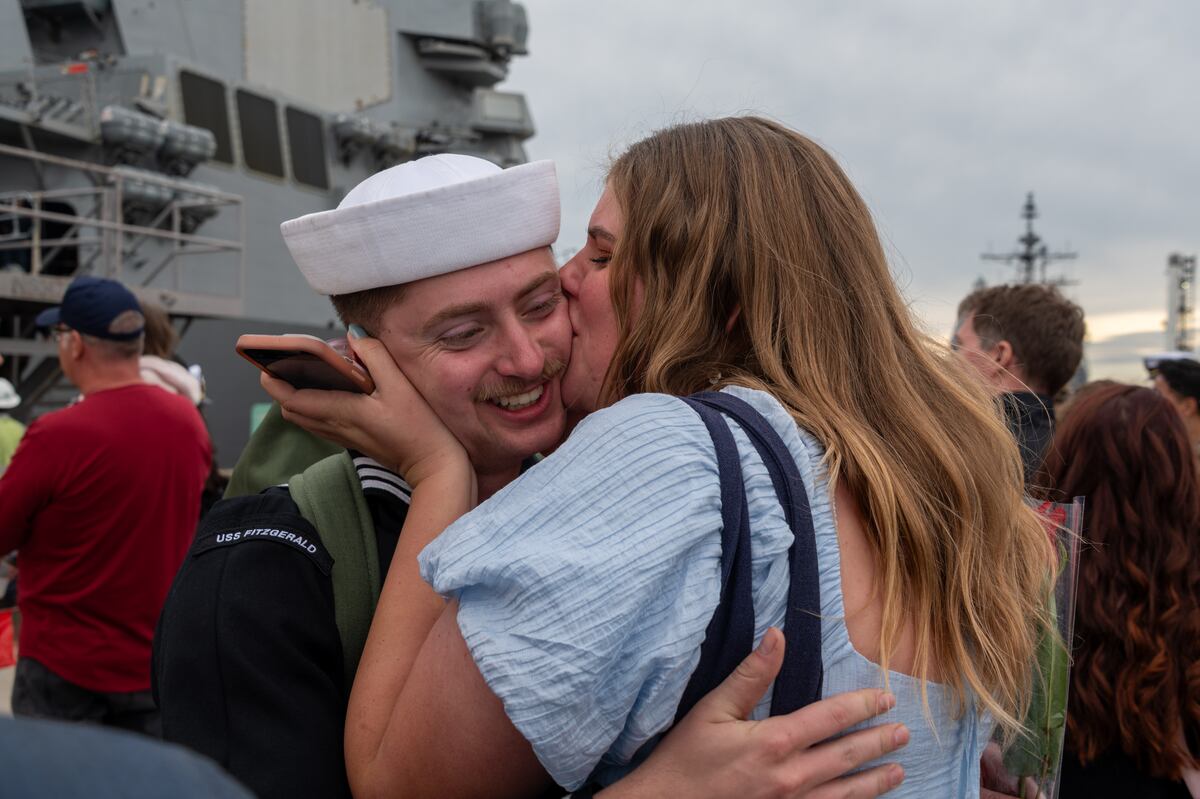

The USS Fitzgerald, an Arleigh Burke-class guided-missile destroyer, docked in San Diego Tuesday, after a seven-month deployment that saw it assist in the U.S. 3rd, 5th and 7th Fleet areas of operations.
During its last deployment, the vessel transited the Strait of Hormuz six times, acted to protect freedom of navigation in the Arabian Gulf, took part in several multinational exercises and strengthened collaboration with such countries as India and Japan, the U.S. Navy said.
“I am truly proud of the hard work and dedication this crew has displayed daily throughout this seven-month deployment,” said Cmdr. Paul F. Richardson III, the Fitzgerald’s commanding officer.
“Their resilience and professionalism enabled us to successfully execute every mission we were tasked with in multiple areas of operation,” he said.
RELATED
The Fitzgerald possesses anti-air warfare, anti-submarine warfare and anti-surface warfare operations capabilities, according to the release.
The U.S. 3rd Fleet encompasses the northern and eastern Pacific Ocean; the 5th Fleet includes the Persian Gulf, Arabian Sea, Gulf of Aden, Strait of Hormuz and other areas in the Middle East; and the 7th Fleet spans upwards of 124 million square kilometers from the International Date Line to the India-Pakistan border.
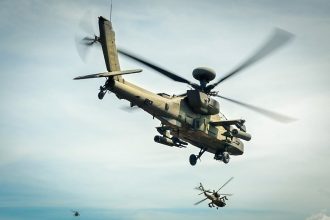
In July, Iranian state TV reported that an Iranian navy helicopter confronted the Fitzgerald after the U.S. warship attempted to approach Iranian territorial waters in the Gulf of Oman, according to The Associated Press at the time.
The Iranian report stated that tensions escalated to the point that the Iranian helicopter flew over the Fitzgerald, warning it to keep its distance, and the Fitzgerald threatened to target the helicopter if it did not retreat.
But a U.S. defense official dismissed the Iranian state TV’s report, claiming that the Fitzgerald had a “safe and professional interaction” with an Iranian SH-3 Sea King helicopter.
Riley Ceder is a reporter at Military Times, where he covers breaking news, criminal justice, investigations, and cyber. He previously worked as an investigative practicum student at The Washington Post, where he contributed to the Abused by the Badge investigation.
Read the full article here