


NEWYou can now listen to Fox News articles!
The Trump administration unveiled a sweeping maritime action plan Friday, aimed at reclaiming U.S. maritime dominance and reducing America’s reliance on foreign-built and foreign-flagged ships that carry the vast majority of its international trade.
Senior administration officials warned in a call with reporters that nearly 99% of U.S. international maritime trade moves on foreign-built, foreign-owned and foreign-flagged vessels, a dependence they described as a national and economic security vulnerability as global competition intensifies.
“Roughly 50% of our trade moves through the maritime domain, and 99% of that moves on foreign-built, foreign-owned and foreign-flagged ships,” one senior administration official said during a call with reporters. “That’s the market we’re trying to tap.”
The initiative, ordered by President Donald Trump in an April executive order, lays out what officials describe as the first comprehensive federal effort in decades to rebuild the nation’s commercial shipbuilding industry, expand the U.S.-flagged fleet and strengthen maritime supply chains.
TRUMP’S $12B RARE EARTH PLAN TARGETS CHINA AS EXPERTS WARN US IS ‘ONE CRISIS AWAY’
The push comes as China now produces more than half of the world’s commercial ship tonnage, while U.S. shipyards account for only a sliver of global output — a disparity that has widened over decades as American commercial shipbuilding declined.
Administration officials also linked that erosion to rising Navy shipbuilding costs.
“The cost of building U.S. Navy warships has gone up far outpacing inflation,” one senior administration official said, arguing that rebuilding commercial shipyards, suppliers and skilled labor pools could help stabilize long-term defense procurement costs.
Officials argued that rebuilding commercial shipbuilding capacity would have ripple effects beyond global trade, strengthening the broader industrial base that underpins U.S. naval power.
Throughout the past several decades, as American commercial shipyards shuttered or downsized, the domestic supplier network, skilled workforce and naval design expertise that support both commercial and military vessels also contracted, officials said. That contraction, they argued, has left Navy shipbuilders more dependent on smaller supplier pools and single-source components, contributing to rising costs and production delays.
“The cost of building U.S. Navy warships has gone up far outpacing inflation,” one senior administration official said, attributing part of the increase to the loss of adjacent commercial shipbuilding activity. By expanding commercial orders and modernizing shipyard infrastructure, officials said, the government hopes to create economies of scale that would benefit both commercial operators and the Navy.
GULF SHIPPING OPERATIONS GRIND TO HALT NEAR IRAN, US QUIETLY PREPARES FOR POSSIBLE STRIKE: ‘HEIGHTENED RISK’
Historically, some U.S. shipyards operated as dual-use facilities, building commercial vessels alongside Navy ships — a model that officials said helped sustain a larger workforce and more resilient supply chain. While the maritime action plan focuses primarily on commercial shipping, administration officials said they expect downstream benefits for military shipbuilding as the industrial base expands.
The decline in U.S. shipbuilding capacity has been decades in the making. Following World War II, the United States maintained dozens of major commercial shipyards. Today, only a small number remain capable of building large oceangoing vessels.
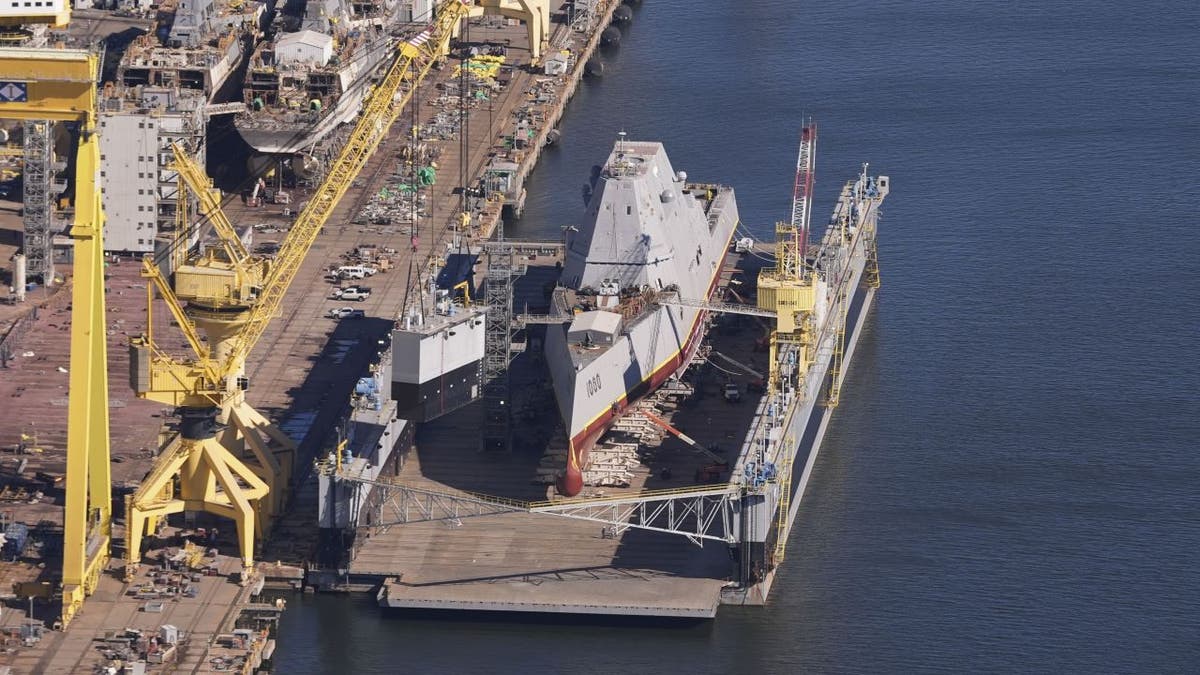
In the defense sector, production has consolidated into a handful of primary shipyards. Just two shipbuilders — Huntington Ingalls Industries’ Newport News Shipbuilding in Virginia and General Dynamics’ Electric Boat in Connecticut and Rhode Island — construct the Navy’s nuclear-powered aircraft carriers and submarines. Surface combatants such as destroyers are built at only a few additional yards.
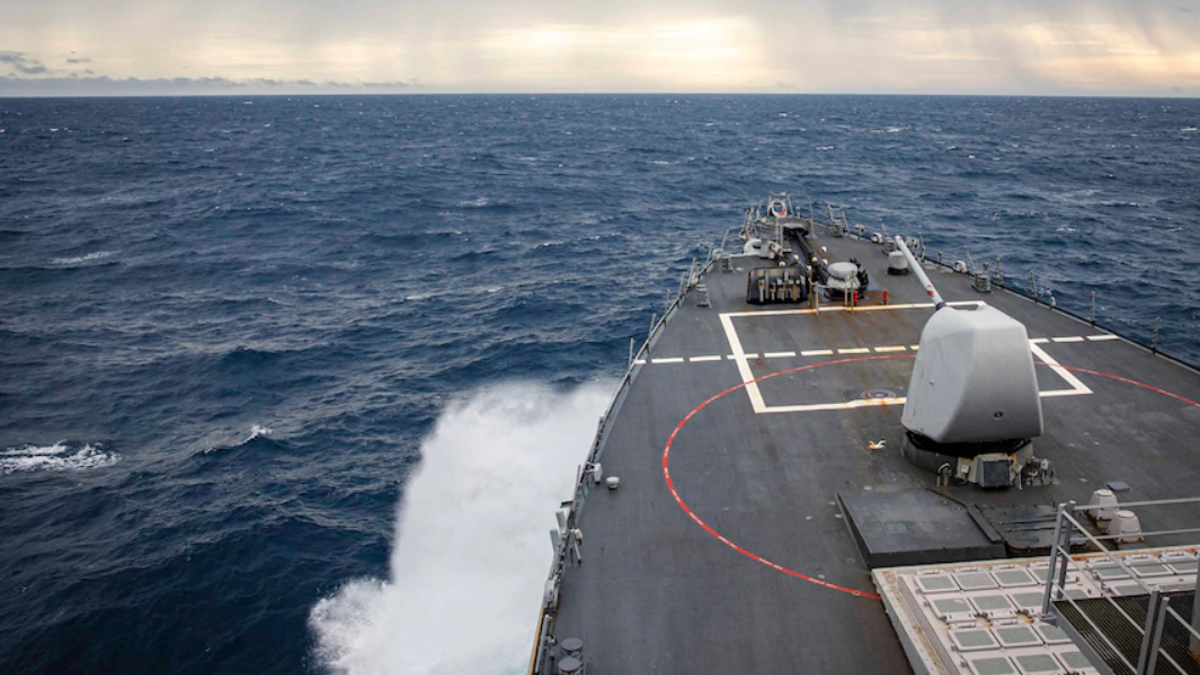
The strain on U.S. shipbuilding has drawn increasingly blunt warnings from Navy leadership. Secretary of the Navy John Phelan has cautioned that American shipyards must “act like we’re at war” as China rapidly expands its fleet and modernizes its production lines.
According to the Office of Naval Intelligence, China’s shipbuilding capacity now exceeds that of the United States by more than 200 times — a gap analysts say reflects Beijing’s heavy state investment in automated, AI-enabled shipyards capable of producing vessels at a pace the U.S. industrial base has struggled to match.
Meanwhile, the Navy continues to face submarine production delays and supply-chain bottlenecks that have slowed delivery of key programs, underscoring the challenges officials say must be addressed if the United States is to regain maritime competitiveness.
Read the full article here