

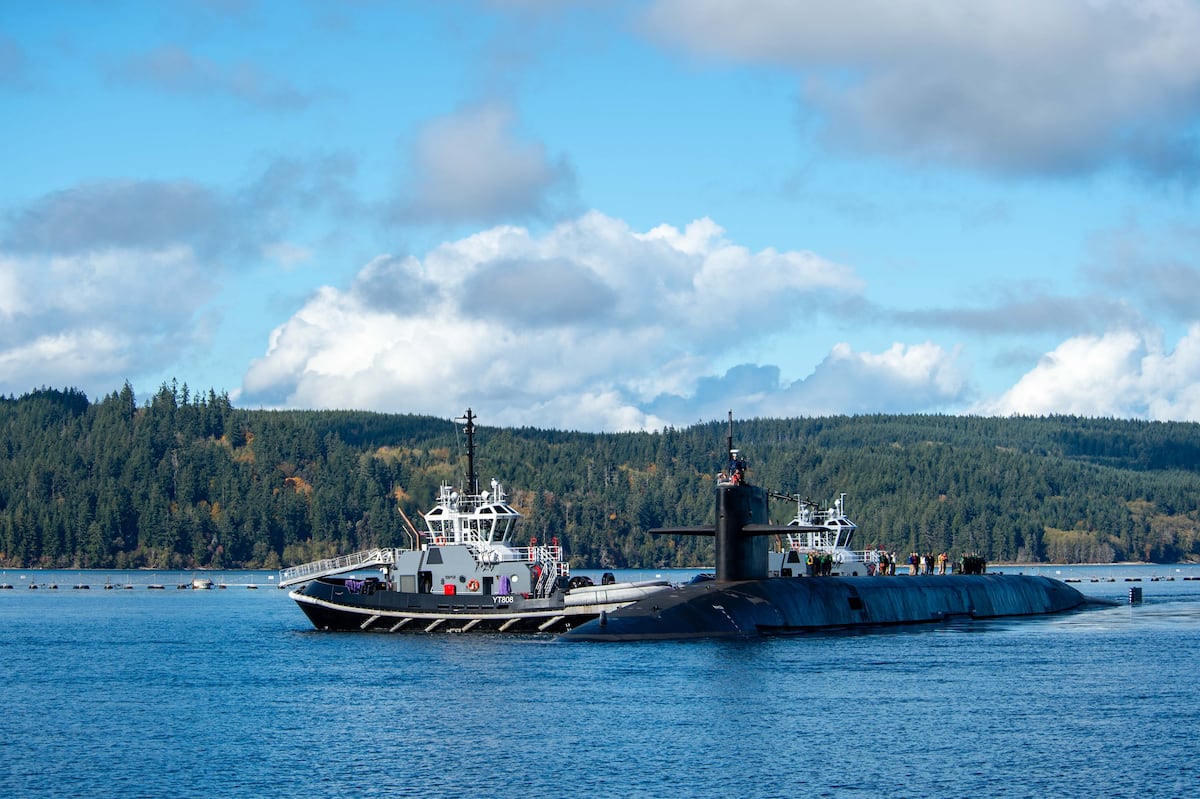

A group representing the U.S. Navy’s “Silent Service” is pressing for new research on environmental hazards in submarines and Department of Veterans Affairs recognition of many health conditions as service-related for submariners.
The Submariners’ Advocacy Group, a nonprofit organization formed in 2024 to represent Navy boat force personnel and veterans, released a report Nov. 8 detailing the chemicals and hazardous substances found in submarines and the potential health effects of exposure to them.
The group says while the Navy and federal researchers have conducted studies on submarine atmospheres, much of the research is dated or remains classified. The group wants the Navy to release its classified atmospheric surveys and conduct additional research, saying the information is vital for veterans to understand their health conditions and receive VA disability compensation.
“For decades, our submariners were told their environment was safe. In reality, they were breathing low-oxygen atmosphere tainted by toxins like monoethanolamine and benzene,” SAG Chairman and CEO Stanley Martinez said in a statement accompanying the report. “These sailors carried out missions vital to national security — yet the government has placed an impossible burden of proof on them as they fight for care.”
According to the report, sailors and other personnel who serve on ballistic missile and fast attack submarines operate in sealed hypoxic environments where they don’t receive enough oxygen and are exposed to chemicals known to cause respiratory illnesses and cancer.
Submariners work in spaces with oxygen levels lower and carbon dioxide levels higher than normal air. In this environment, they also may have been exposed to benzene, asbestos — known human carcinogens — and monoethanolamine, a chemical used to scrub carbon dioxide from the air, ozone, lubricating oils and ionizing radiation.
The National Research Council Committee on Toxicity has conducted studies on the submarine atmosphere regarding contaminants and made recommendations for limiting levels of exposure. The Navy has set exposure guidance levels for many of the contaminants.
But according to the SAG report, the Navy has not released the findings of atmospheric surveys carried out on submarines in the 1990s and 2000s. SAG leaders want the reports declassified.
“A consistent pattern of outdated research and unheeded calls for further investigation hinders the scientific understanding of submarine atmospheric contaminants,” the report states. “The failure to conduct comprehensive surveys or validate newer more conservative fundings indicates a consistent de-prioritization of submariner well-being.”
According to SAG Executive Director David Bozarth, the group was established last year after several submarine veterans began discussing their health histories, the perceived lack of information about potential exposures and challenges getting benefits from the VA.
Bozarth said he knows fellow sailors who have died from cancer, amyotrophic lateral sclerosis and Parkinson’s disease and felt the community of roughly 300,000 service members and veterans needed a unified voice to represent their interests.
“A lot of submarine veterans have lost hope and we’re giving them hope again. We are standing up for them,” Bozarth said during an interview with Military Times.
Among the group is Joshua Goodenough, who served in the Navy from 1981 to 1996. A nuclear electrician’s mate, Goodenough served on both fast attack and ballistic missile submarines before transferring to an aircraft carrier after he was diagnosed with a gastrointestinal disease that prevented him from remaining on submarines.
After retiring from the Navy, Goodenough applied for VA benefits for hearing loss and tinnitus. He was denied his claim. Years later, he developed asthma, and having served aboard a carrier during the time frame specified by the PACT Act — the law that made it easier for ill Gulf War, Iraq and Afghanistan veterans to receive benefits — he refiled a claim.
He was approved, not only for asthma but also for tinnitus and hearing loss. He suspects that all three conditions originated from his submarine days.
“It took an act of Congress for the VA to recognize burn pits as causing problems,” Goodenough said, referring to the PACT Act. “It’s troubling that [submariners] come down with cancer or COPD or asthma and the VA won’t recognize it.”
As part of developing its reporting on potential hazardous exposures on submarines, SAG sought out experts at the National Jewish Health’s Center for Deployment-Related Lung Disease in Denver. The center played a significant role in researching the health effects of exposure to burn pits and particulate matter in the Middle East and Afghanistan, contributing to the development of the PACT Act.
SAG leaders plan this year to meet with members of Congress, VA and Department of Defense officials and researchers to call attention to this group of veterans who they say are being unfairly denied health care and benefits for diseases caused by toxic exposures.
The group wants more research on the estimated 130 chemicals that may circulate in a submarine’s atmosphere, release of all survey records conducted from 1960 to 2000 and support for their members from other veterans organizations.
Members also want the VA to educate providers and claims adjusters on the unique exposures of submariners and for Congress to amend the PACT Act to include submariners.
This change, SAG officials say, would “recognize the inherent and continuous toxic exposures unique to the submarine environment.”
“We want Congress to mandate that the submarine duty automatically makes a sub vet eligible for disability claims just by being on a submarine, whether it’s radiation, atmosphere, whatever. Everybody is exposed,” Bozarth said.
Patricia Kime is a senior writer covering military and veterans health care, medicine and personnel issues.
Read the full article here