



NEWYou can now listen to Fox News articles!
So Congress is now deep into week two of a 16-17 day recess for Easter and Passover. The Department of Homeland Security shutdown is approaching two months. There’s no obvious path to end the impasse.
This is why some GOP lawmakers — and conservative activists — demanded President Donald Trump summon Congress back into session and fund DHS.
Let’s do a deep dive on that.
The president has the authority to call Congress into session under “extraordinary” circumstances. But that hardly compels legislative activity – let alone craft a legislative solution. However, it’s unclear if Trump would even have the power to strong-arm the House and Senate back into session under current parliamentary circumstances.
HOUSE GOP’S DHS FUNDING MEASURE SURVIVES CRITICAL HURDLE BUT PATH UNCERTAIN IN SENATE
Article II, Section 3 of the Constitution states the following: “He may, on extraordinary Occasions, convene both Houses, or either of them, and in Case of Disagreement between them, with Respect to the Time of Adjournment, he may adjourn them to such Time as he shall think proper.”
American presidents have called special sessions of Congress 45 times. Twenty-seven instances involved a recall of both chambers. President George Washington was the first to order a special session of Congress in 1791. Washington wrote to Vice President John Adams – the president of the Senate – to convene the Senate to consider various nominations and to fill posts in Vermont, which was about to become the 14th state. Vermont was the first state following the original 13 colonies to enter statehood.
President Abraham Lincoln ordered a special session for both bodies of Congress after the attack on Fort Sumter in 1861.
In late July, 1948, President Harry Truman became the most recent chief executive to deploy his power to reconvene Congress. Congress adjourned for the year earlier that month. That never happens with the contemporary Congress. So Truman summoned lawmakers back to Washington on what is known as “Turnip Day” in Missouri, July 26. That’s the day when farmers should plant turnips for a fall harvest. So, historians bequeathed that particular Congressional meeting as the “Turnip Day Session.” Truman wanted action on education policy, energy and housing.
Future Senate Majority Leader Robert Taft (R-OH) declared that the Senate wouldn’t “give that fellow anything” during the meetings.
Congress didn’t do much, passing two bills which the president felt fell short of his goals. That helped fuel Truman’s “Do Nothing Congress” moniker, which was the hallmark of his presidential campaign that fall.
BEHIND THE SCENES OF CONGRESS’ ELEVENTH-HOUR RUSH TO FUND THE DHS
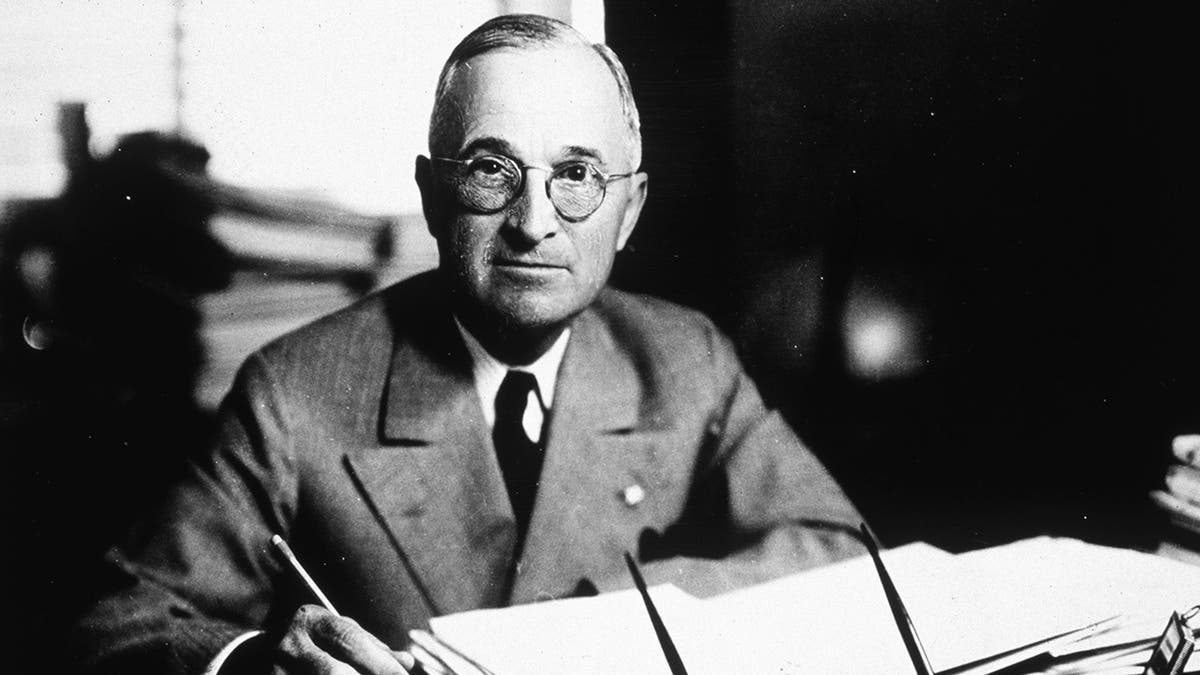
Again, the point is that a president may recall Congress to Washington. But that authority doesn’t necessarily dictate a legislative outcome.
But what we must explore is what circumstances dictate “extraordinary Occasions” as spelled out in the Constitution.
Well, that’s pretty vague. But it’s worth noting that in the 18th, 19th and even part of the 20th centuries, Congress only huddled in Washington for distinct periods. In fact, in those days, lawmakers were often gone from Washington for months at a time. That’s partly why the Founders installed a provision empowering the President to recall Congress in a time of crisis.
However, as is often the case in politics, a crisis is in the eye of the beholder and far from constitutionally defined.
So that brings us to present day. A failure to fund the Department of Homeland Security for nearly two months is a certain crisis. The decision to recall Congress is always up to the president. But there may be Constitutional limits on when a president may reconvene Congress. And despite the drama now enveloping funding for the Department of Homeland Security, Trump may be hamstrung in any effort to press lawmakers back into service in Washington.
Article I, Section 5 of the Constitution says that, “Each House may determine the Rules of its Proceedings.” Since the House and Senate have not both adopted an adjournment resolution to be out of session for a fixed period of time, Congress could make the case that it’s not out of session to start with, huddling for just a few moments every three days in brief sessions. Thus, the parliamentary posture of Congress makes the option of ordering “both Houses, or either of them” to convene under Article II Section 3 unavailable to the President.
SEE IT: LAWMAKERS CAUGHT ON VACATION AMID RECORD-BREAKING SHUTDOWN WHILE DHS WORKERS GO UNPAID
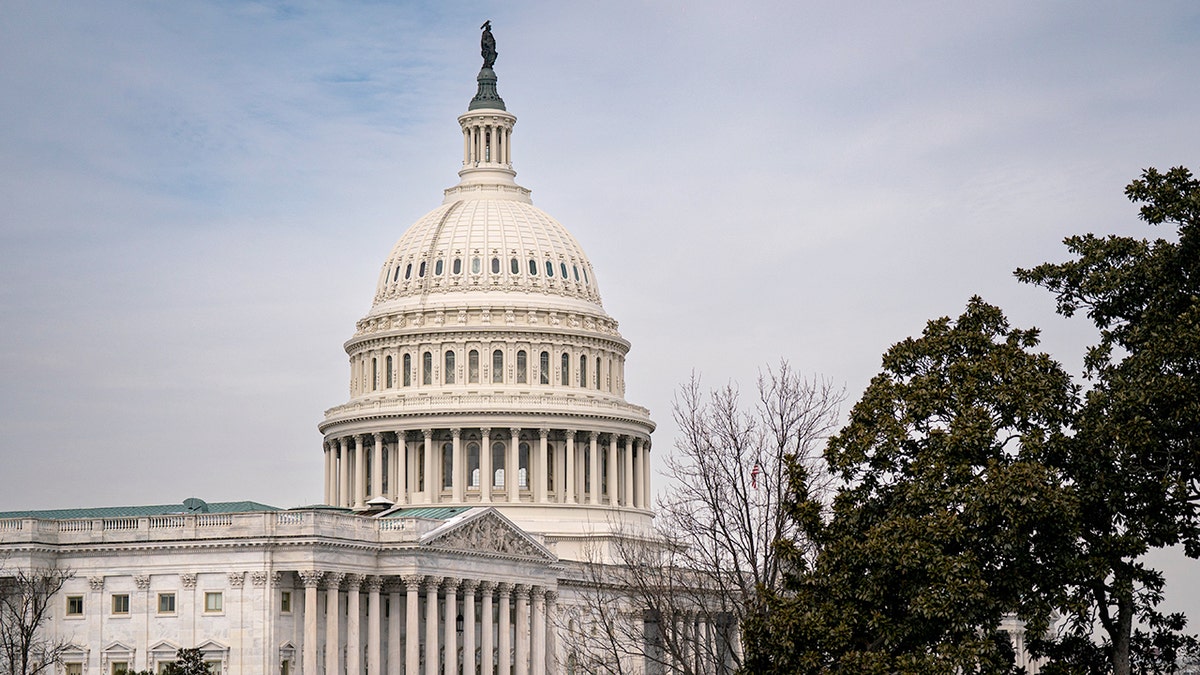
One could certainly argue that Congress isn’t really in session right now, meeting every so often for a few seconds with a skeleton crew.
It doesn’t matter. As stated above, the Constitution gives Congress ultimate authority to establish its own rules. President Barack Obama challenged whether Congress was actually in session or not when he tried to bypass the Senate confirmation process and install officials on the National Labor Relations Board (NLRB) during the period between Senate sessions. The Obama administration contended that Congress really wasn’t in session. Thus, the “recess appointment” option was available to the President, not requiring Senate confirmation.
However in NLRB v. Canning in 2014, the Supreme Court ruled 9-0 in favor of Congress. It upheld the right of Congress to make its own rules under Article I, Section 5. In other words, if Congress says it’s in session, it’s in session. And when it’s out, it’s out. It’s not up to the President to make that determination.
Writing for the Court, former Justice Stephen Breyer found that “pro forma sessions count as sessions, not as periods of recess…the Senate is in session when it says it is, provided that, under its own rules, it retains the capacity to transact Senate business.”
The current parliamentary status of both the House and Senate mimics the conditions which triggered NLRB v. Canning. So, as much as some want President Trump to convene Congress, he simply can’t.
Moreover, study Breyer’s point that the House and Senate have “the capacity to transact Senate business.” We saw that last week when the Senate was supposed to be in a pro forma session, conducting no business. Senate Majority Leader John Thune (R-SD) passed the Senate’s DHS funding plan for a second time, during what was scheduled to be a pro forma meeting.
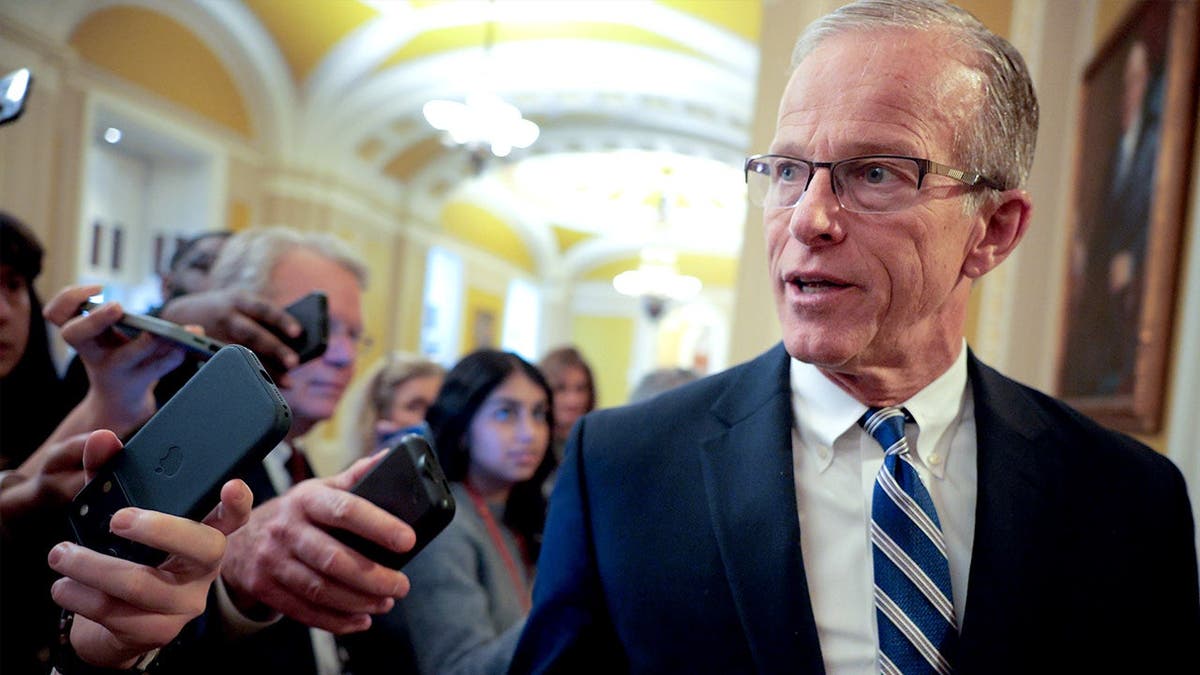
Don’t forget that some House conservatives wanted the Senate to use its pro forma last Monday to pass the House-approved DHS bill.
So there were plenty of lawmakers, pundits and members of the public moaning about Congress leaving town and not fully addressing the DHS funding dispute. So, they turned to the president, hoping he would intervene for the first time since Harry Truman and command lawmakers to hustle back to Washington.
No Turnip Day Session for this Congress this year. And if President Trump tried a “Turnip Day Session,” it’s unlikely that any lawmakers would bother to “turnip” under the Constitution.
Read the full article here