
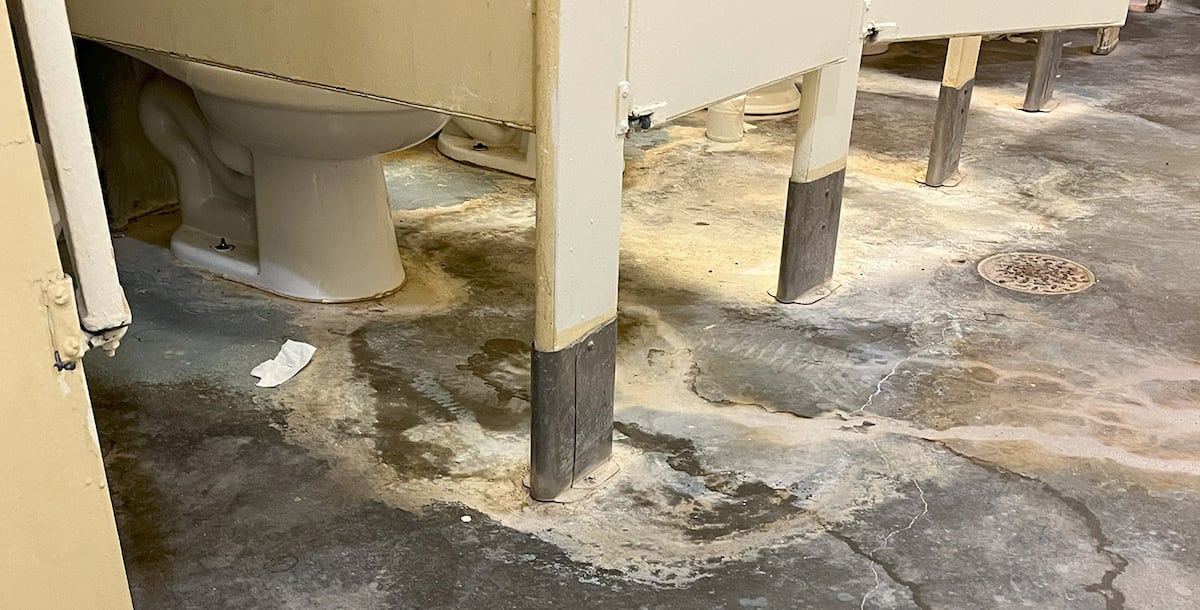

Raw, dried sewage streaked the floor around the toilets used by soldiers deployed to the border between Mexico and the United States, a Pentagon watchdog found during a summer visit that documented a host of substandard housing conditions.
In a management advisory released this week, the Department of Defense Inspector General said troops assigned to Joint Task Force-Southern Border were housed in quarters that did not comply with Army housing requirements, sometimes for extended periods of time without documentation.
In March, the Army reported that 9,000 active duty troops would be supporting President Trump’s southern border executive orders, which direct the military to give greater priority to border control.
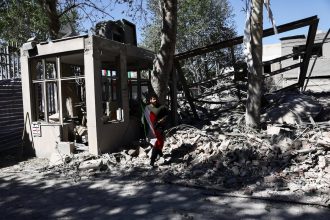
Site visits to Fort Bliss in Texas and Doña Ana Range Complex in New Mexico found that soldiers were often living without appropriate space. The visits also uncovered “unsanitary conditions in bathroom facilities,” specifically “leaking raw sewage, non-functional toilets, and general disrepair of facilities.” Soldiers also voiced concerns about nonworking air conditioning and “electrical capacity concerns.”
“According to Fort Bliss officials, exceeding the electrical capacity of the buildings leads to tripping of the circuit breakers,” the report said, “which creates a fire risk in the aging buildings.”
Army regulations set limits on how long soldiers can be housed in reduced living space. Inspectors documented living quarters at Fort Bliss offering as little as 45 square feet per soldier and those at Doña Ana Range Complex providing just 69 square feet. The Army expects soldiers to have at least 72 square feet when mobilized, though expectations exist with proper approval and timelines.
The Inspector General visited the sites in July 2025 to observe the housing conditions for soldiers in 2nd Stryker Brigade Combat Team, 4th Infantry Division, 2SBCT, from Fort Carson, Colorado.
The Army announced in September that the 2nd Armored Brigade Combat Team, 1st Armored Division was slated to take over for that unit in the fall but did not give an exact date.
The Inspector General also referenced reports prepared by 2SBCT’s Preventative Medicine team, from May to August 2025, that flagged a myriad of concerns, including “air conditioners causing respiratory symptoms,” outstanding maintenance requests for clogged toilets, “unsanitary conditions in community areas,” and stagnant water that caused insect and mosquito numbers to surge.
The U.S. Northern Command Inspector General responded to the advisory’s recommendations saying that soldiers’ housing had been changed and members of the task force were no longer housed at Doña Ana Range Complex.
A U.S. Northern Command spokesperson confirmed that no soldiers were being housed at the New Mexico range complex, telling Military Times, “This was resolved long before the publication of this advisory report and page 4 of the report notes this. We will provide a response to the Inspector General within the requested timeframe.”
Col. Marty Meiners, from the Army Communications & Outreach Office said that as of early October, soldiers at Fort Bliss are living in housing that meets Army requirements.
The joint task force, he said, “conducts regular assessments of all living facilities across the 1,954 miles of U.S. Southern Border. This is an evolving, novel operational mission that requires commanders to dynamically move units.
“We continue to ensure compliance with habitability and quality-of-life standards; when we find deficiencies, we will move quickly to thoroughly address them.”
Eve Sampson is a reporter and former Army officer. She has covered conflict across the world, writing for The New York Times, The Washington Post and The Associated Press.
Read the full article here