

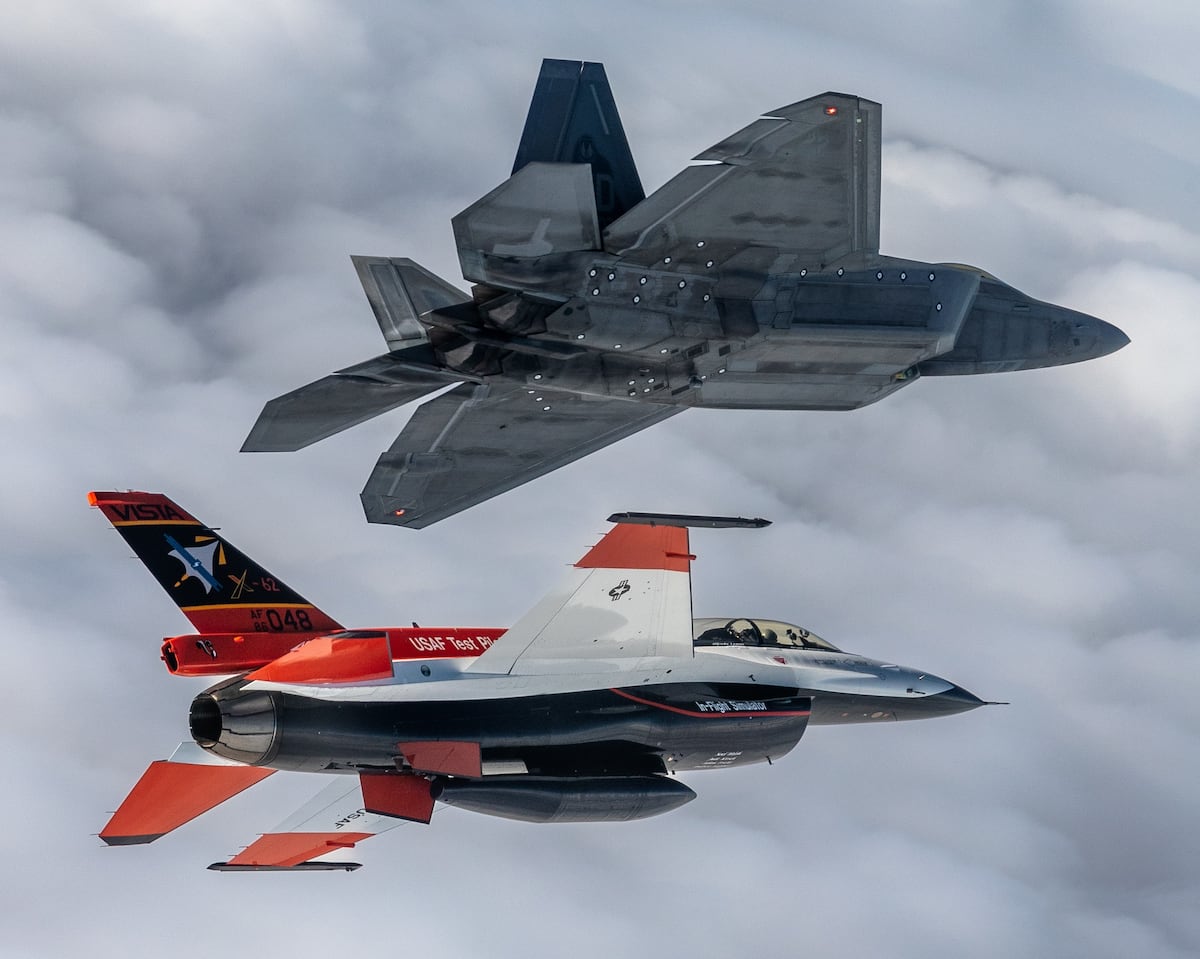

The Air Force is upgrading its experimental, autonomous X-62 VISTA aircraft with new radar and other mission systems to expand its ability to conduct complicated tests of artificial intelligence technology.
The X-62 VISTA, which stands for Variable Stability In-flight Simulator Test Aircraft, is now undergoing a comprehensive mission systems upgrade, according to a Thursday statement from Edwards Air Force Base in California.
The airplane is a heavily modified F-16D test aircraft with upgraded avionics, which has been adapted into a platform to test cutting-edge aerospace technology and, in recent years, has been used to experiment with autonomous flight capabilities.
The U.S. Air Force Test Pilot School, which is part of Edwards’ 412th Test Wing, will install upgrades that will allow the X-62 to adopt advanced radar and sensor integration, “pushing the aircraft into more complex scenarios, and will evaluate AI systems integration, collaboration, and make decisions in real time,” according to the Air Force’s statement.
“As the Air Force expands its exploration of integrating autonomy into air and space operations, the X-62 is the bridge between the historical human-centered approach and tomorrow’s integration of uncrewed combat aviation,” Air Force Test Pilot School Commandant Col. Maryann Karlen said. “The mission systems upgrade enables X-62 to continue the journey in developing breakthroughs in artificial intelligence and autonomy.”
The improvements were made possible by an investment from the Pentagon’s Test Resource Management Center.
A major element of this upgrade will be the addition of Raytheon’s advanced PhantomStrike radar to the X-62.
Raytheon, a subsidiary of RTX, said in a Friday statement that PhantomStrike is an air-cooled, compact fire-control radar which is “smaller, lighter and requires less power than modern AESA radars.”
Raytheon said PhantomStrike could be integrated into uncrewed aerial vehicles, light attack aircraft, rotary wing aircraft and other platforms, delivering “superior radar capability at nearly half the cost of typical fire control radars.”
The X-62’s autonomous capabilities compliment other Air Force investments in autonomy, like the Viper Experimentation and Next-Generation Operations Model, or VENOM, experiments.
In September 2023, the Air Force and Defense Advanced Research Projects Agency worked together to stage the first-ever dogfights pitting a human pilot against a jet flown by artificial intelligence, in this case the X-62.
Officials from the Air Force and DARPA said in April 2024 that data collected from that successful dogfighting experiment could help the Air Force hone its plans for collaborative combat aircraft, which are drone wingmen that fly alongside manned fighters and carry out missions such as air-to-air combat.
Former Air Force Sec. Frank Kendall expressed confidence in the X-62’s ability to fly autonomously in April 2024, and soon afterward visited Edwards to ride as a passenger in the AI-piloted jet.
Stephen Losey is the air warfare reporter for Defense News. He previously covered leadership and personnel issues at Air Force Times, and the Pentagon, special operations and air warfare at Military.com. He has traveled to the Middle East to cover U.S. Air Force operations.
Read the full article here