

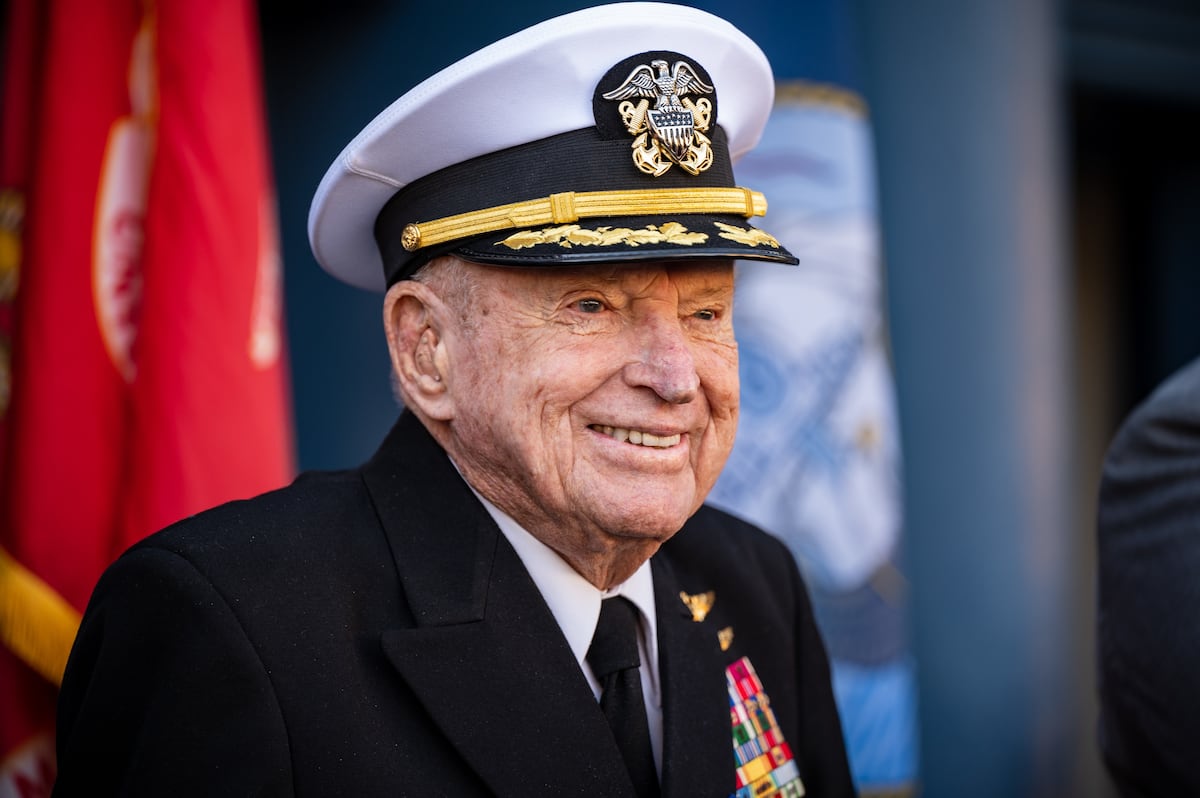

Naval aviator Capt. Royce Williams, 100, is set to be awarded the Medal of Honor for his 1952 actions during the Korean War, Rep. Darrell Issa, R-Calif., announced on Wednesday.
Issa has played a significant role in Williams’ recognition, introducing the “Valor Has No Expiration Act” in 2025 to extend and expand upon the 1996 National Defense Authorization Act. Introduced last June, the act was instrumental in highlighting Williams’ Korean War record.
According to Issa’s press release, the NDAA waived the five-year limitation for Medal of Honor consideration — but only for actions occurring between 1940 and 1990 and only for classified “intelligence activities.”
The Valor Has No Expiration Act seeks to remove such arbitrary timelines and expand the criteria to include classified acts or those withheld from the public record.
In 2023, Williams received the Navy Cross — an upgrade from the Silver Star Medal he previously received on May 7, 1953.
In 1952, flying a F9F-5 Panther fighter, Williams found himself alone, outmanned and piloting what was considered an inferior aircraft, when he was swarmed by seven MiG-15 aircraft. Despite initially flying with two other VF-781 pilots, Williams soon found himself unaccompanied.
“In the moment I was a fighter pilot doing my job. … I was only shooting what I had,” Williams said in a previous account of the fight. “They had me cold on maneuverability and acceleration. … The only thing I could do was out-turn them.”
For 35 minutes, Williams engaged with the enemy, shooting down four of the planes in what is considered the longest dogfight in U.S. military history.
According to the U.S. Naval Institute, no other American fighter pilot has ever shot down four MiG-15s in one fight. Williams’ action, however, was kept classified for more than 50 years, making the pilot ineligible for the Medal of Honor.
That all changed on Wednesday, however, when President Donald Trump called the 100-year-old to notify him that he was to receive the nation’s highest award for valor.
“What Royce did is — still to this day — the most unique U.S.-Soviet aerial combat dogfight in the history of the Cold War, and one in which Royce Williams demonstrated indomitable courage of the highest skill under incalculable duress,” Issa said in a press release.
“It is my honor to have fought all these years for Royce to gain a recognition that he has not sought, but so richly deserves.”
Claire Barrett is an editor and military history correspondent for Military Times. She is also a World War II researcher with an unparalleled affinity for Sir Winston Churchill and Michigan football.
Read the full article here