
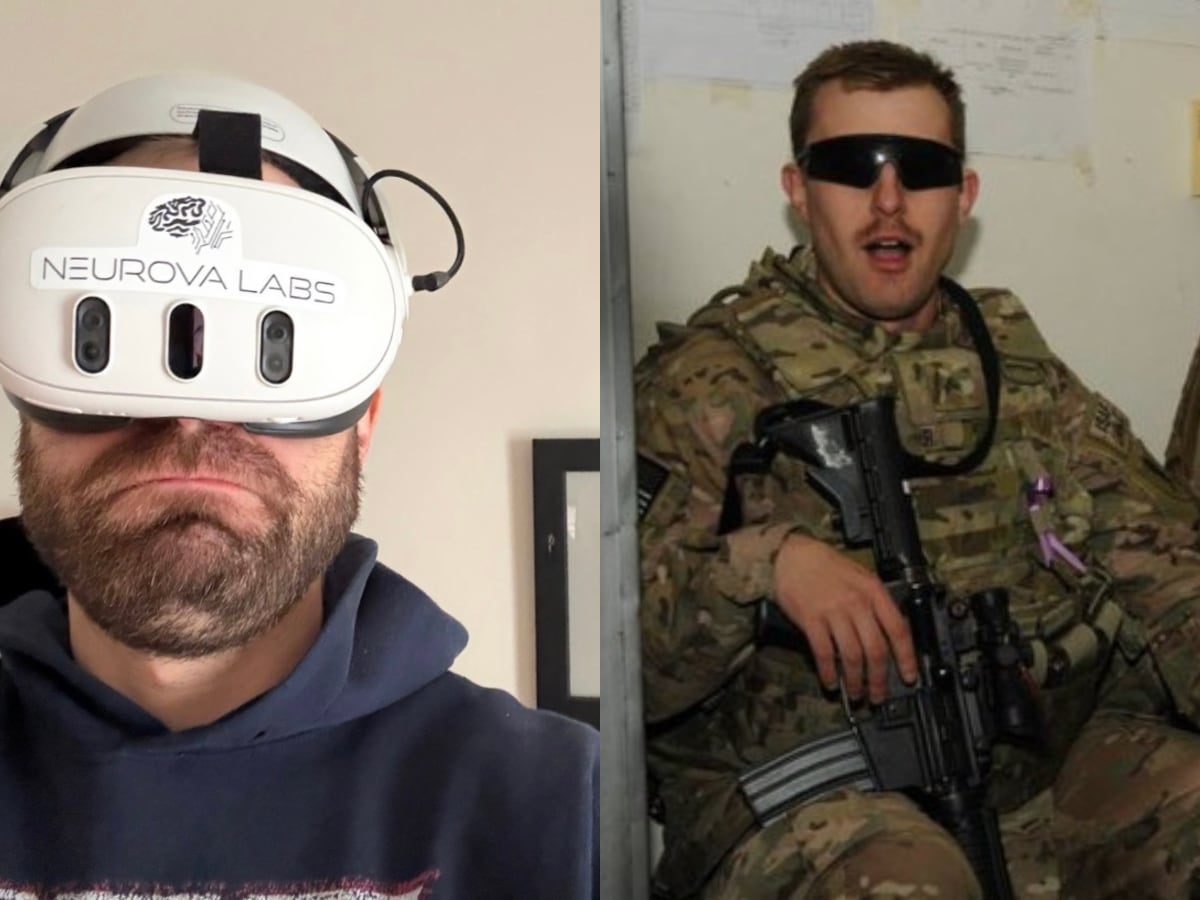

I was in southern Afghanistan in May 2014 when a vehicle-borne improvised explosive device detonated near me while covering a routine patrol as a public affairs specialist.
It was something I had a dozen times before, but in a flash I was on my back, ears ringing, lungs full of dust.
The blast knocked me out cold. When I came to, nothing was where it had been. The explosion left me with a traumatic brain injury and partial deafness in my right ear, with tinnitus that still rings to this day. I deal with memory loss, light sensitivity and sudden moments of confusion or panic that attack without warning.
So, when the possibility to test a virtual reality therapy program developed by Neurova Labs became available, I took it — not as a paid endorsement or promotional experiment, but as a disabled veteran looking for something that might actually help. I went into the process cautiously. PTSD and traumatic brain injuries do not present the same way for everyone, and there is no universal solution.
I am not a medical professional nor can I explain the underlying science in clinical terms. What I can offer here is a firsthand account of what this three week experience looked like and what, if anything, changed.
The therapy, first launched in 2024, follows a structured but approachable format. The program is designed as a three-week regimen, with two active weeks of VR sessions conducted four days per week.
Each session lasts between 45 minutes to an hour. Every session begins with a warm-up using a commercially available application that emphasizes fast-paced interaction with a virtual pistol. It is engaging and requires focus, coordination and quick reactions.
That warm-up is followed by the core Neurova Labs environment, which centers on a target practice-style scenario. Each session includes five rounds, roughly lasting five minutes apiece. The pace is steady and immersive, requiring sustained attention without becoming overwhelming.
The session ends with a cooldown phase that is intentionally slower and more abstract. This final segment uses calming sounds, soft music and shifting colors, with only limited interaction. The goal is clearly to bring the body down from heightened alertness into a calmer state.
I was skeptical going in, particularly about whether something so technology-driven could meaningfully impact symptoms rooted in trauma. What surprised me most was how quickly I noticed the changes, starting with my sleep regimen.
Before starting the program, I routinely woke up very early in the morning, often around 4 or 4:30 a.m., and struggled to fall back asleep. By the second week of therapy, I was sleeping later and more consistently, often until around 8:30 a.m.
The time it took me to fall asleep also shortened. That alone had a noticeable effect on my mood and energy throughout the day.
Sleep was not the only area where I saw improvement. Over the course of the three weeks, I noticed a shift in how I reacted to stress. As a freelance writer and creative, my work involves deadlines, travel and uncertainty. Combined with the broader stress of daily life, it is easy to slip into a constant state of anxiety.
During this period, I found that my fight or flight response did not take over as quickly, and when it did, I was able to step out of it faster than before. The stress was still there, but it felt more manageable.
That distinction matters.
For many people with PTSD, the challenge is not avoiding stress altogether, but shortening the amount of time the body stays stuck in a heightened state. Being able to regroup more quickly can change the course of an entire day.
Another encouraging aspect of the experience was seeing how actively the software is being developed. The program is still in its testing phase, and during my three weeks of use the program received multiple updates. That signaled an ongoing effort to refine and improve the product rather than treating it as a finished, static solution, which happens with a lot of the treatment programs offered to veterans today.
Accessibility may be the most significant strength of the Neurova Labs approach. Traditional treatment pathways, particularly within the Department of Veterans Affairs, can be difficult to navigate. Appointments, long waits, unfamiliar clinical environments and administrative hurdles can themselves become sources of stress. For many veterans, that friction leads to disengagement from treatment entirely.
This model removes many of those barriers. As long as you have the headset, therapy can be done at home, on your schedule and in an environment you control. Morning sessions with coffee, afternoon sessions between work obligations or evening sessions after a difficult day are all possible. That level of autonomy changes how treatment feels. It becomes something you opt into rather than something you endure.
I spoke with other users who approach the program differently. One former Marine described using the therapy as a situational tool — logging sessions before or after known stressors rather than following a strict schedule. That flexibility suggests a broader range of use beyond structured programs, which may be especially helpful for veterans balancing work, family and ongoing care.
It is also important to be clear about what this is not. This is not a cure-all, and it is not a replacement for counseling, psychiatric care, or other evidence-based treatments. Neurova Labs does not present it that way.
What it offered me was an entry point. Feeling tangible improvement in one area made me more open to continuing therapy elsewhere, including reengaging with the VA and seeking additional counseling when needed.
Over the last three weeks my quality of life improved. I slept better. My mood was steadier. Social interaction felt less overwhelming.
As the company continues to refine its product and explore wider availability, accessibility may ultimately be its most meaningful contribution: Treatment that meets veterans where they are, rather than forcing them into systems they distrust.
That alone has the potential to keep more people engaged in care. For me, the biggest takeaway was simple. For the first time in a long time, I felt hopeful. That alone made it easier to keep going.
Read the full article here